Bee coloring pages
Free printable bees · Ages 3+
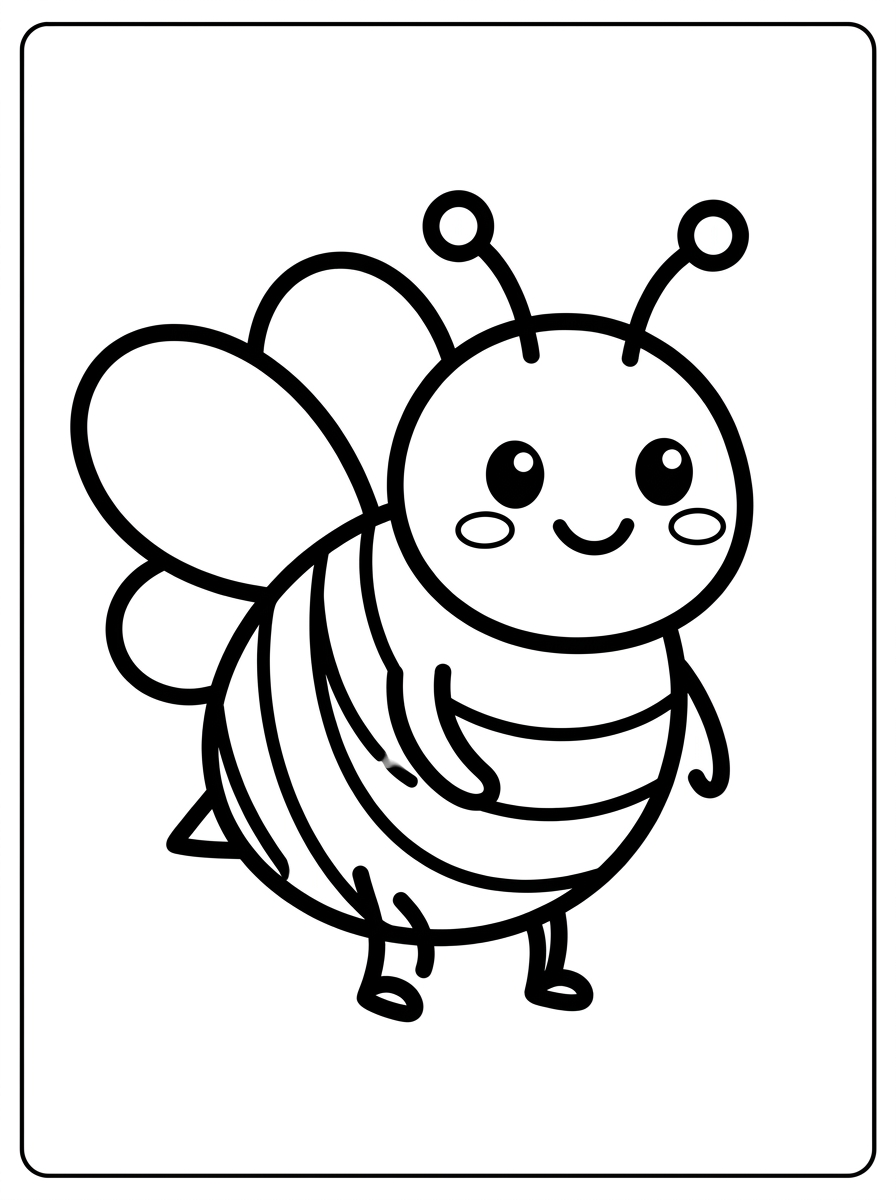
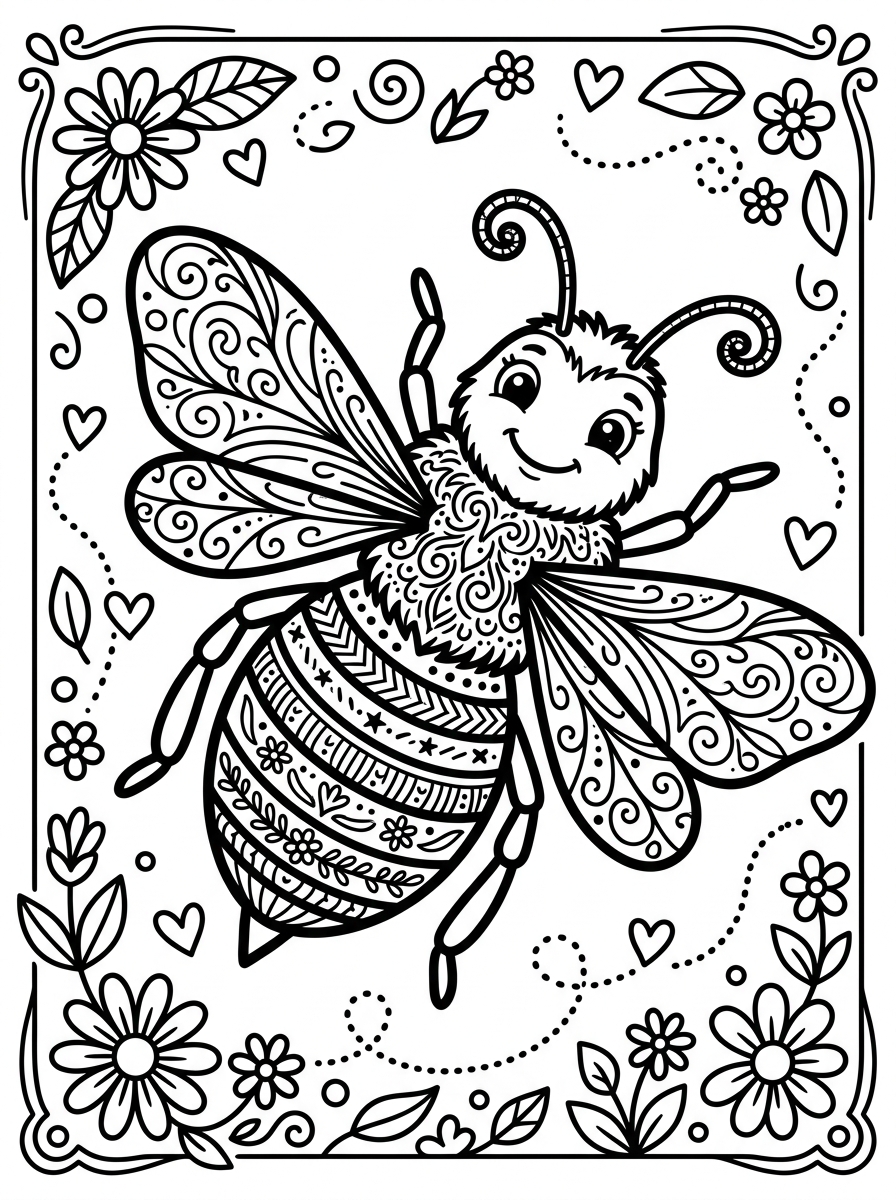
Bees turn a simple striped body into one of the most recognizable pages in any coloring book. The yellow-and-black bands, fuzzy thorax and transparent wings reward small attention — a child who carefully colors each stripe in alternating order learns more about pattern than they realize.
- Habitat
- Gardens, fields, forests and beehives worldwide.
- Diet
- Nectar and pollen from flowers.
- Size
- Small — most honeybees are about 1/2 inch long.
- Best for
- Ages 3+


About this animal
Meet the bee
Bees turn a simple striped body into one of the most recognizable pages in any coloring book. The yellow-and-black bands, fuzzy thorax and transparent wings reward small attention — a child who carefully colors each stripe in alternating order learns more about pattern than they realize.
- Habitat
- Gardens, fields, forests and beehives worldwide.
- Diet
- Nectar and pollen from flowers.
- Size
- Small — most honeybees are about 1/2 inch long.
Coloring tips
How to color a bee
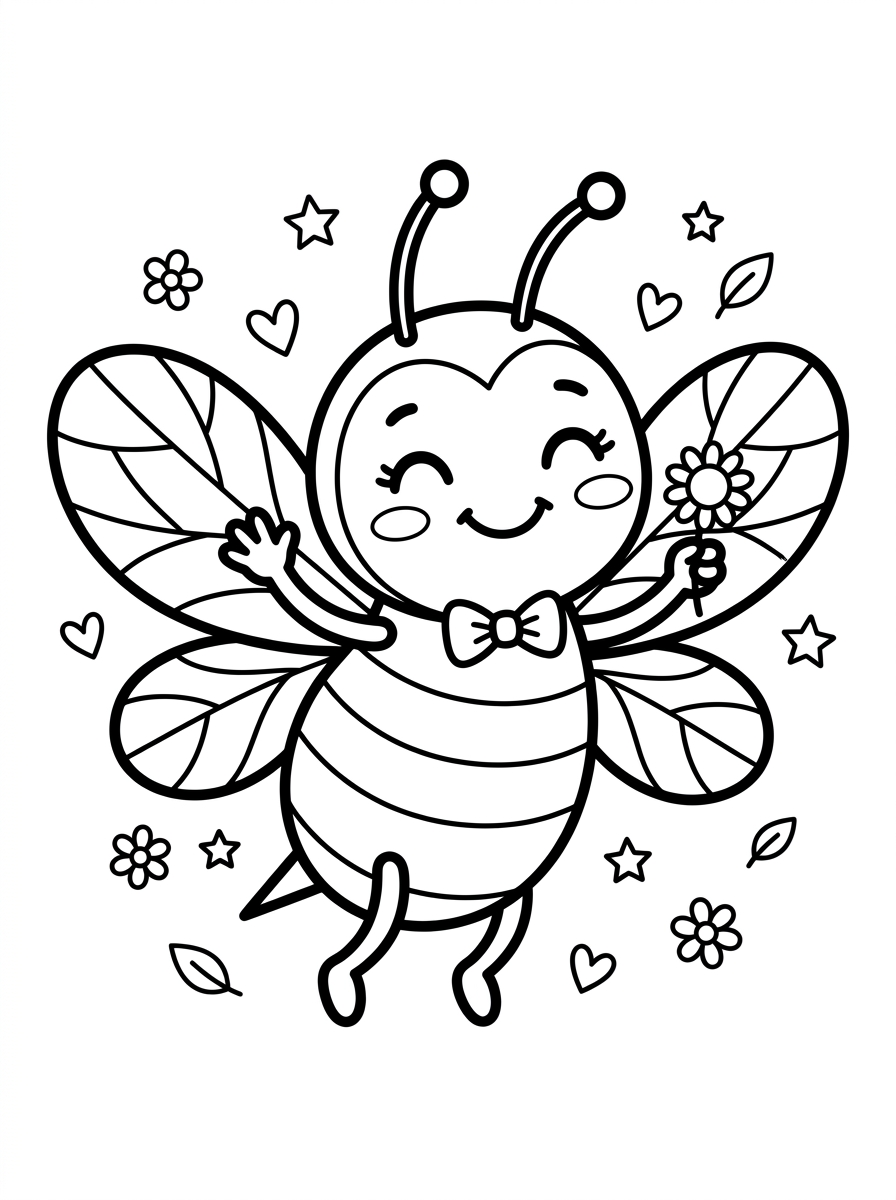
Use bright yellow for the body and black for the stripes — keep the stripes wider than the gaps between them. Color the thorax (the area between the head and the body) yellow with a fuzzy outline. The wings should be left blank or filled with a very pale gray so they read as transparent. A flower in any color completes the scene.
Looking for more variety in the same style? Browse the other insects & bugs or head back to the full animal hub.
Step-by-step
How to color this bee
Five short steps that work for any age. Crayons, colored pencils and markers all work — pick whichever your child reaches for first.
Print the page
Save the bee coloring page to your device, then print it on standard letter or A4 paper. Thicker paper (around 90 gsm or 60 lb) handles markers without bleed-through; regular printer paper is fine for crayons and colored pencils.
Plan the symmetry
Most insects — butterflies especially — are nearly symmetrical. Whatever color or pattern you put on the left wing, mirror it on the right. Pencil light marks first if it helps.
Use bold, saturated color
Insects are small and reward strong colors: deep orange for monarchs, bright red for ladybugs, sun yellow for bees. Press a little harder than usual to make the color really pop.
Place the insect in a garden
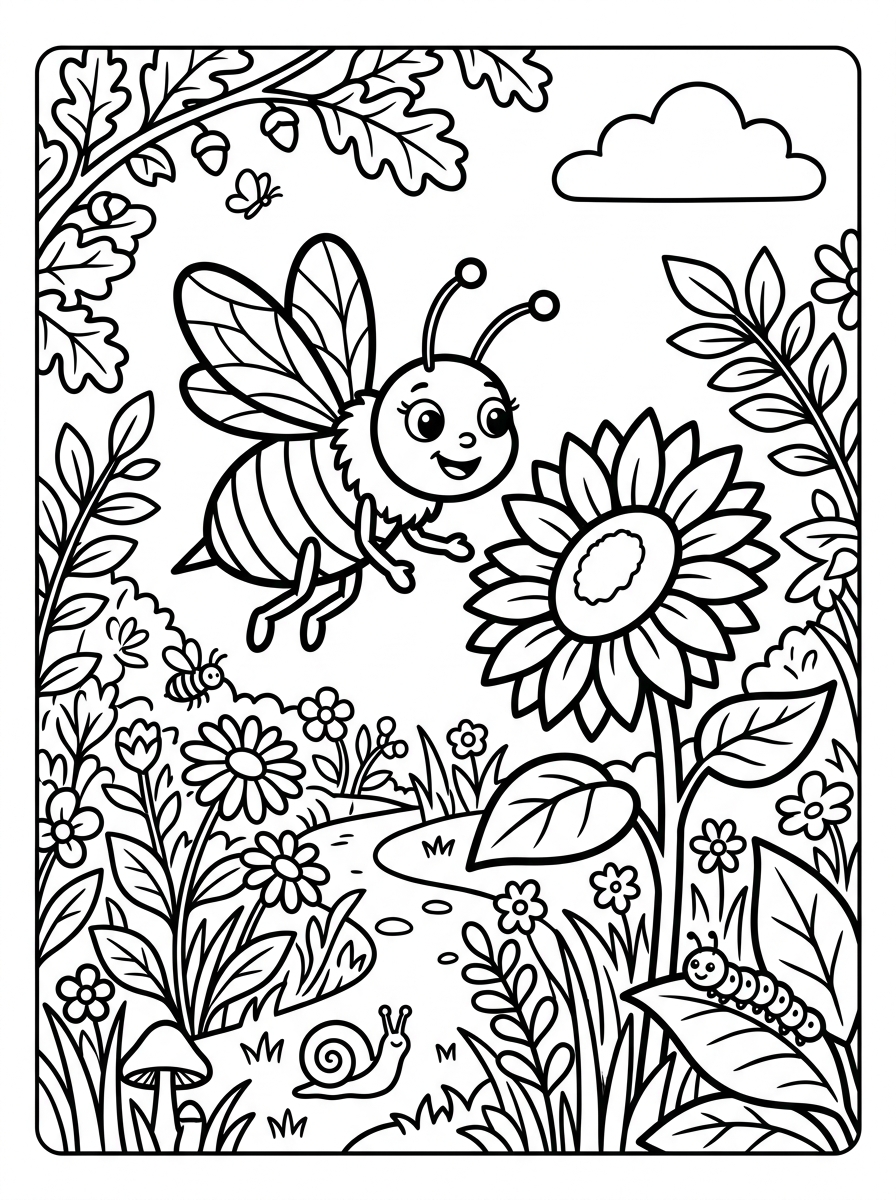
A single flower or leaf under the insect — green stem, two or three colorful petals — turns the page into a tiny garden moment. Less is more here; one flower beats five.
Finishing touches
When the colors are where you want them, trace the main outlines with a thin black pen to make the bee pop off the page. Date the back, snap a photo for the family album, then stick the finished page on the fridge.
What you'll need
A quick supplies checklist
Don't have everything? A printer, a piece of paper and a single crayon is enough to get started. The rest is optional.
Printer
Color or black-and-white both work. Set the print size to 'fit to page' and use letter or A4 paper.
Paper
Standard 20 lb (75 gsm) printer paper for crayons; 60+ lb (90+ gsm) for markers so the ink doesn't bleed.
Crayons
Best for ages 3-5 — forgiving on small hands, no smearing, and bright enough to feel finished in minutes.
Colored pencils
Best for ages 6+ and adults — perfect for shading, blending and the detailed pattern variants.
Markers
Bold, fast results. Pair with heavier paper so the ink stays on the page and doesn't soak through.
Did you know?
Fun facts to share while you color
Read these out loud — they turn a 20-minute coloring session into a quick science lesson.
Bees communicate the location of flowers with a special 'waggle dance.'
A single honeybee visits up to 5,000 flowers in a day.
Bees have five eyes — two large compound eyes and three small ones on top of the head.
A bee's wings beat about 230 times per second.
You might also like
Kids who color bees also like
Butterfly coloring pages
Butterflies are the closest the animal kingdom gets to a built-in mandala. The wings are symmetrical, segmented and almost always filled with bold patterns — which makes them the most popular insect coloring page by a wide margin. They work for preschoolers (one or two colors per panel) and adults (full pattern matching).
Ladybug coloring pages
Ladybugs are the page where the design does most of the work. The bright red dome, black spots and small black head are a famous combination — so famous that kids can finish a recognizable page with two crayons. They're a great first 'insect' page for children who aren't ready for legs and antennae everywhere.
Rabbit coloring pages
Rabbits are the rare animal that's equally at home on an Easter card, a fairy-tale page and a realistic nature scene. The long ears and crouched posture give kids a recognizable silhouette that's hard to color wrong. They're also one of the only popular subjects where white is the most realistic choice — useful for teaching kids that 'leave it blank' is a real coloring decision.
Owl coloring pages
Owls are the bird group's secret weapon. The body is short and round, the head is huge, and the face is a near-perfect circle — three properties that make the page extremely forgiving for younger kids. Older kids and adults can lean into the feather detail, which is some of the richest in the catalog.
Parrot coloring pages
Parrots are the brightest page in any coloring book. Macaws and lorikeets give kids permission to use every crayon in the box without it feeling chaotic — the birds really do look like that in real life. Even smaller species like cockatiels reward kids who lean into accents (the orange cheek patch, the yellow crest).
Insects & bugs
More insects & bugs coloring pages
Insects punch above their weight on a coloring page. A butterfly's wings work like a mandala — symmetrical, segmented, and impossible to ruin. Bees and ladybugs come pre-loaded with bold, recognizable patterns kids can copy or remix.
FAQ
Bee coloring pages — FAQ
- Are these bee coloring pages free to print?
- Yes — every bee coloring page on this site is free to download, print and color for personal, classroom and library use. No watermark, no signup.
- What age are bee coloring pages best for?
- Ages 3+. The yellow-and-black bands, fuzzy thorax and transparent wings reward small attention — a child who carefully colors each stripe in alternating order learns more about pattern than they realize.
- What colors should I use for a bee?
- Use bright yellow for the body and black for the stripes — keep the stripes wider than the gaps between them. Color the thorax (the area between the head and the body) yellow with a fuzzy outline. The wings should be left blank or filled with a very pale gray so they read as transparent. A flower in any color completes the scene.
- What do bees eat and where do they live?
- Nectar and pollen from flowers. Gardens, fields, forests and beehives worldwide.
- What other animals are similar to a bee?
- Try our butterfly, ladybug, rabbit coloring pages — kids who finish a bee page usually enjoy those next.
Looking for something else?
Browse all 41 animals in the catalog — pets, farm, safari, forest, birds, ocean and insects.
All animal coloring pages