Parrot coloring pages
Free printable parrots · All ages
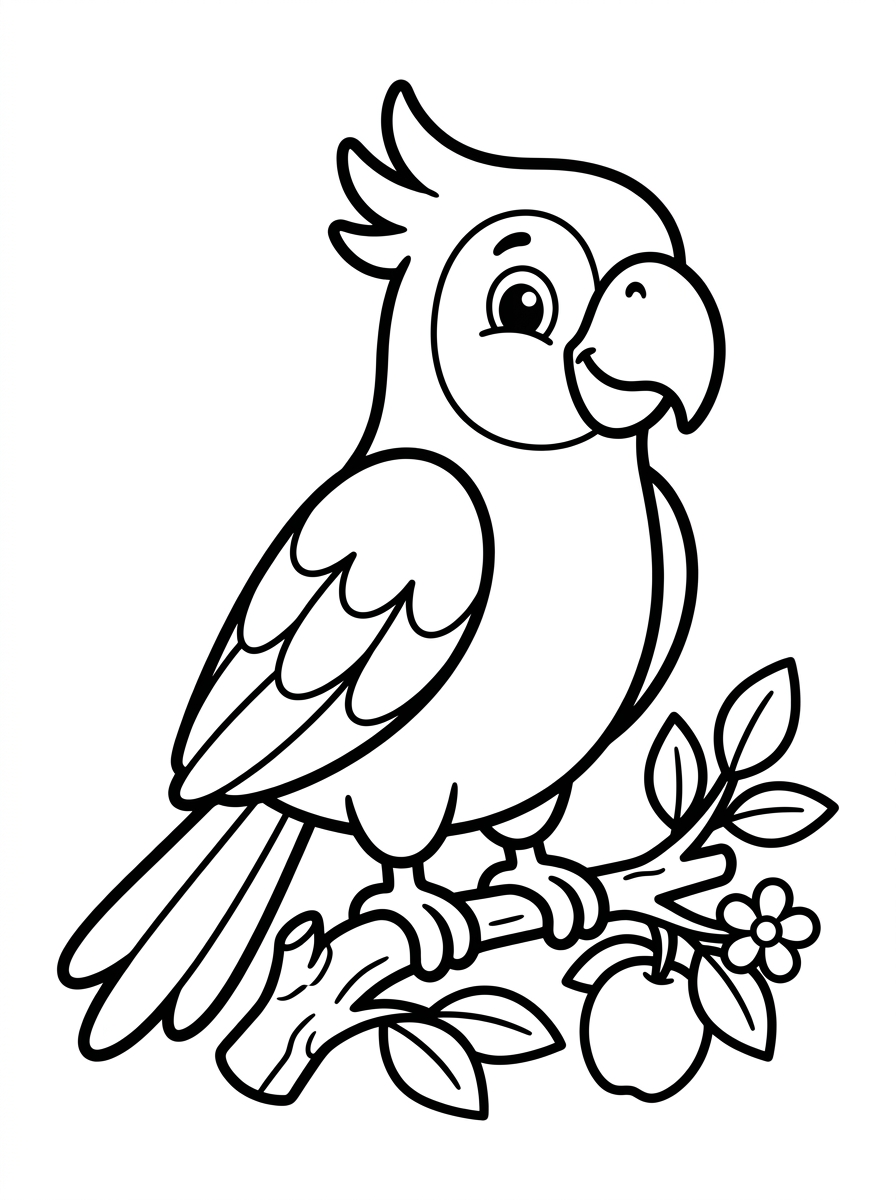
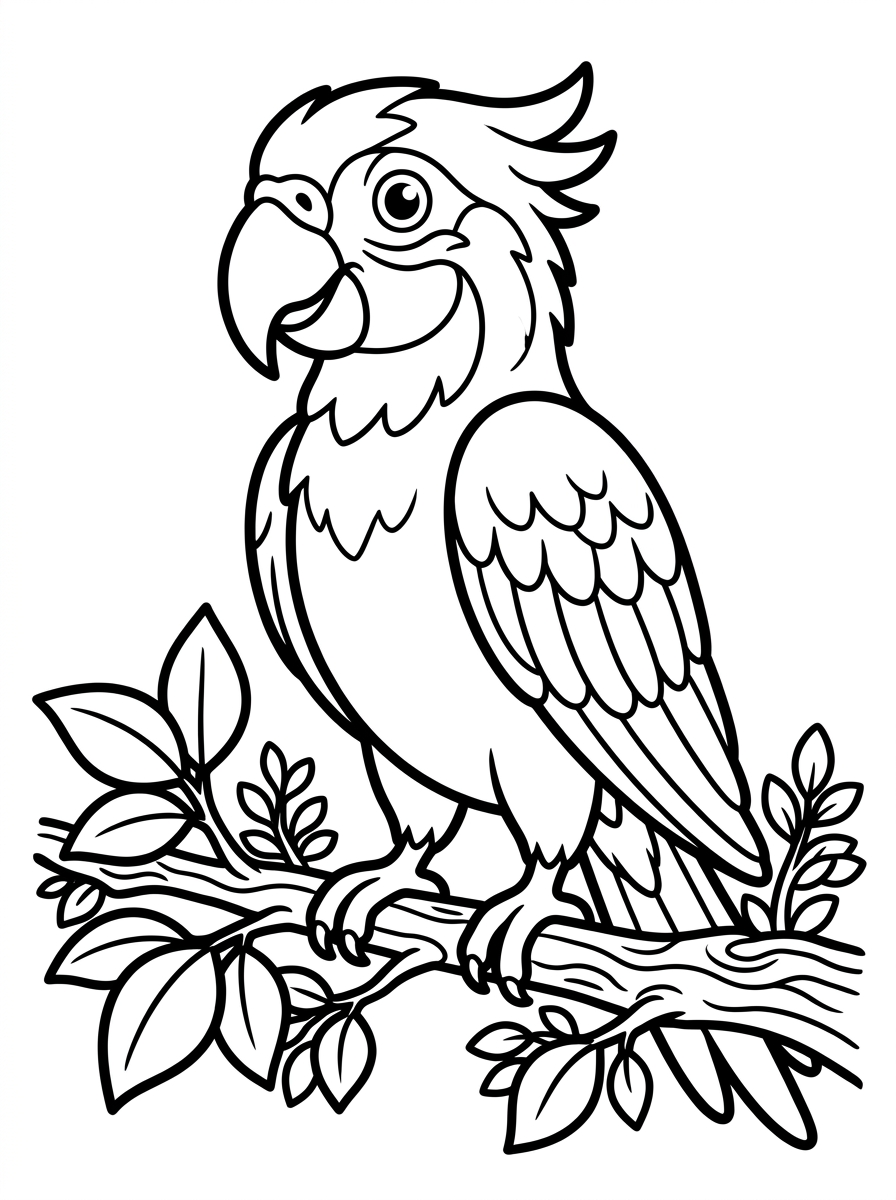
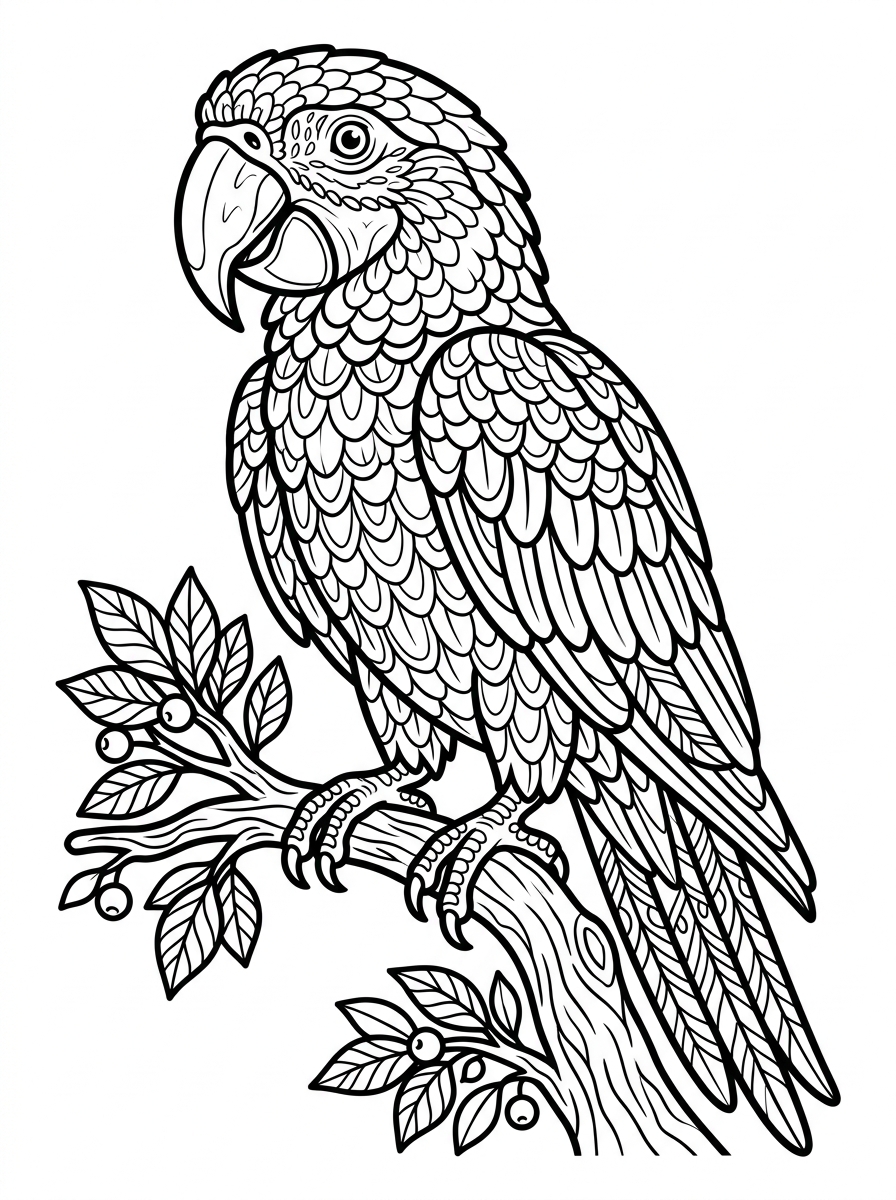
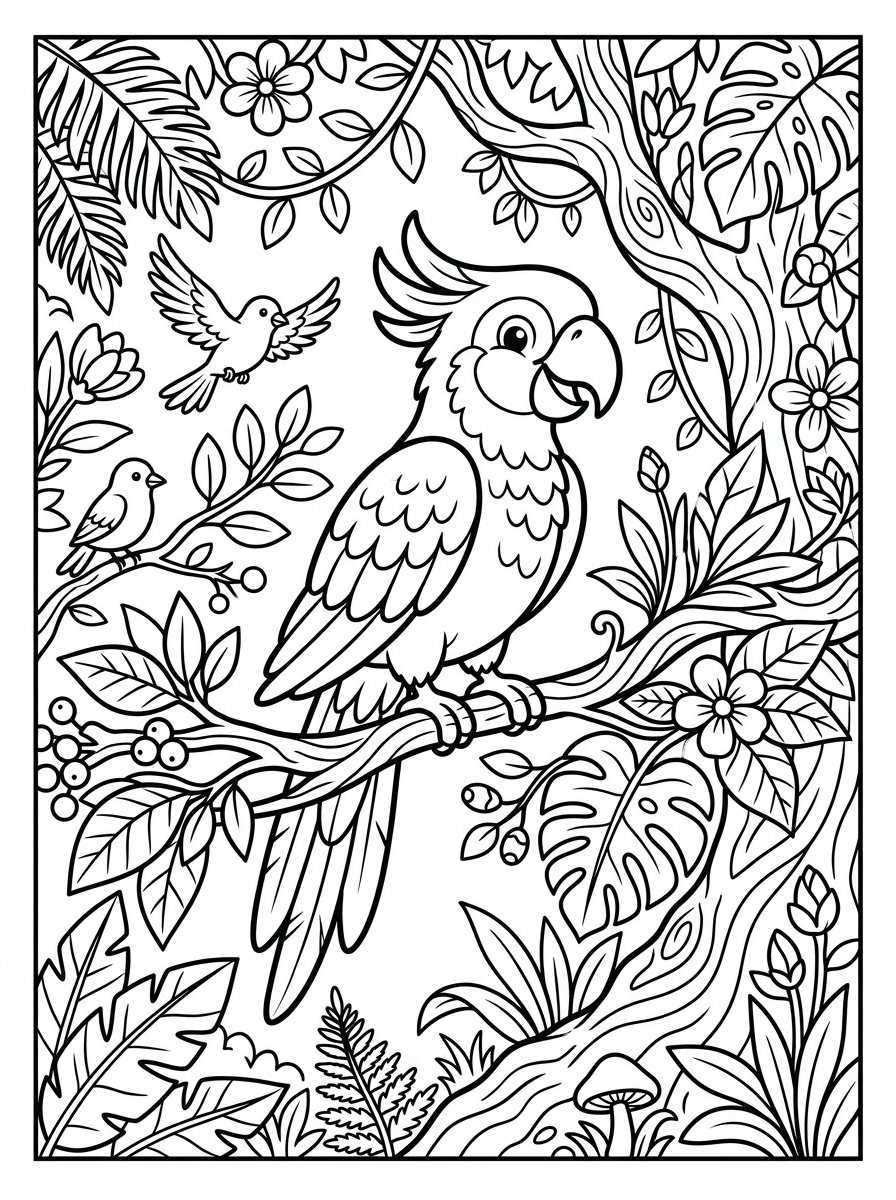
Parrots are the brightest page in any coloring book. Macaws and lorikeets give kids permission to use every crayon in the box without it feeling chaotic — the birds really do look like that in real life. Even smaller species like cockatiels reward kids who lean into accents (the orange cheek patch, the yellow crest).
- Habitat
- Tropical and subtropical forests worldwide.
- Diet
- Omnivore — fruit, seeds, nuts, and occasionally insects.
- Size
- Tiny (parrotlets, 4 in) to large (macaws, up to 40 in).
- Best for
- All ages


About this animal
Meet the parrot
Parrots are the brightest page in any coloring book. Macaws and lorikeets give kids permission to use every crayon in the box without it feeling chaotic — the birds really do look like that in real life. Even smaller species like cockatiels reward kids who lean into accents (the orange cheek patch, the yellow crest).
- Habitat
- Tropical and subtropical forests worldwide.
- Diet
- Omnivore — fruit, seeds, nuts, and occasionally insects.
- Size
- Tiny (parrotlets, 4 in) to large (macaws, up to 40 in).
Coloring tips
How to color a parrot
Pick a species before you start: scarlet macaws are red body + yellow + blue wing tips; blue-and-gold macaws are blue back + yellow front; rainbow lorikeets are six colors at once. Black beak, black around the eye, and black-grey feet keep the bright body from melting into chaos.
Looking for more variety in the same style? Browse the other birds or head back to the full animal hub.
Step-by-step
How to color this parrot
Five short steps that work for any age. Crayons, colored pencils and markers all work — pick whichever your child reaches for first.
Print the page
Save the parrot coloring page to your device, then print it on standard letter or A4 paper. Thicker paper (around 90 gsm or 60 lb) handles markers without bleed-through; regular printer paper is fine for crayons and colored pencils.
Map the body and wings separately
Birds have two big color areas — the body and the wings — and they're often different colors. Color the body first with one shade, then move to the wings with a contrasting color.
Detail the feathers
Use short overlapping strokes along the wings and tail to suggest individual feathers. Vary the pressure to create a slight gradient from light at the body to dark at the tip.
Finish with beak and feet
Color the beak a bright yellow, orange or black depending on the species. Match the feet to the beak. A small patch of blue sky behind the bird, or a leafy branch under its feet, completes the page.
Finishing touches
When the colors are where you want them, trace the main outlines with a thin black pen to make the parrot pop off the page. Date the back, snap a photo for the family album, then stick the finished page on the fridge.
What you'll need
A quick supplies checklist
Don't have everything? A printer, a piece of paper and a single crayon is enough to get started. The rest is optional.
Printer
Color or black-and-white both work. Set the print size to 'fit to page' and use letter or A4 paper.
Paper
Standard 20 lb (75 gsm) printer paper for crayons; 60+ lb (90+ gsm) for markers so the ink doesn't bleed.
Crayons
Best for ages 3-5 — forgiving on small hands, no smearing, and bright enough to feel finished in minutes.
Colored pencils
Best for ages 6+ and adults — perfect for shading, blending and the detailed pattern variants.
Markers
Bold, fast results. Pair with heavier paper so the ink stays on the page and doesn't soak through.
Did you know?
Fun facts to share while you color
Read these out loud — they turn a 20-minute coloring session into a quick science lesson.
Some parrots can live over 80 years.
African greys can learn over 1,000 words and use them in context.
Parrots are zygodactyl — two toes face forward, two face backward.
There are more than 350 species of parrot worldwide.
You might also like
Kids who color parrots also like
Owl coloring pages
Owls are the bird group's secret weapon. The body is short and round, the head is huge, and the face is a near-perfect circle — three properties that make the page extremely forgiving for younger kids. Older kids and adults can lean into the feather detail, which is some of the richest in the catalog.
Eagle coloring pages
Eagles are the page where wings matter as much as bodies. Whether perched or mid-flight, the spread of the feathers takes up most of the picture, and the curved beak and intense forward gaze give the page a sharpness that few other animals have. Best for kids who already enjoy detail work.
Flamingo coloring pages
Flamingos are the easiest page to make beautiful. The classic S-curve neck, single bent leg and that one unforgettable shade of pink combine into a silhouette that feels finished after only a few minutes of coloring. They also pair naturally with palm trees, sunsets and other coloring-page favorites.
Penguin coloring pages
Penguins are the easiest 'detailed' animal in the catalog. The classic tuxedo coloring — black back, white belly, yellow accents — is so well-established that kids can finish a recognizable page with just three crayons. Add a chick or an iceberg and you've got an instant winter scene.
Monkey coloring pages
Monkeys are the safari group's wild card. They're shaped like small people, which makes the face the most expressive in the catalog, and the long tail wraps around branches in ways that create instant scene-building. Pair one with a banana and the page is finished without any background work at all.
Birds
More birds coloring pages
Birds are the most varied set in the catalog: a parrot is the loudest page on the shelf, an owl the quietest, and a penguin barely needs more than black and white. Feathers reward children who like detail without overwhelming the ones who don't.
FAQ
Parrot coloring pages — FAQ
- Are these parrot coloring pages free to print?
- Yes — every parrot coloring page on this site is free to download, print and color for personal, classroom and library use. No watermark, no signup.
- What age are parrot coloring pages best for?
- All ages. Even smaller species like cockatiels reward kids who lean into accents (the orange cheek patch, the yellow crest).
- What colors should I use for a parrot?
- Pick a species before you start: scarlet macaws are red body + yellow + blue wing tips; blue-and-gold macaws are blue back + yellow front; rainbow lorikeets are six colors at once. Black beak, black around the eye, and black-grey feet keep the bright body from melting into chaos.
- What do parrots eat and where do they live?
- Omnivore — fruit, seeds, nuts, and occasionally insects. Tropical and subtropical forests worldwide.
- What other animals are similar to a parrot?
- Try our owl, eagle, flamingo coloring pages — kids who finish a parrot page usually enjoy those next.
Looking for something else?
Browse all 41 animals in the catalog — pets, farm, safari, forest, birds, ocean and insects.
All animal coloring pages