Tiger coloring pages
Free printable tigers · Ages 5+
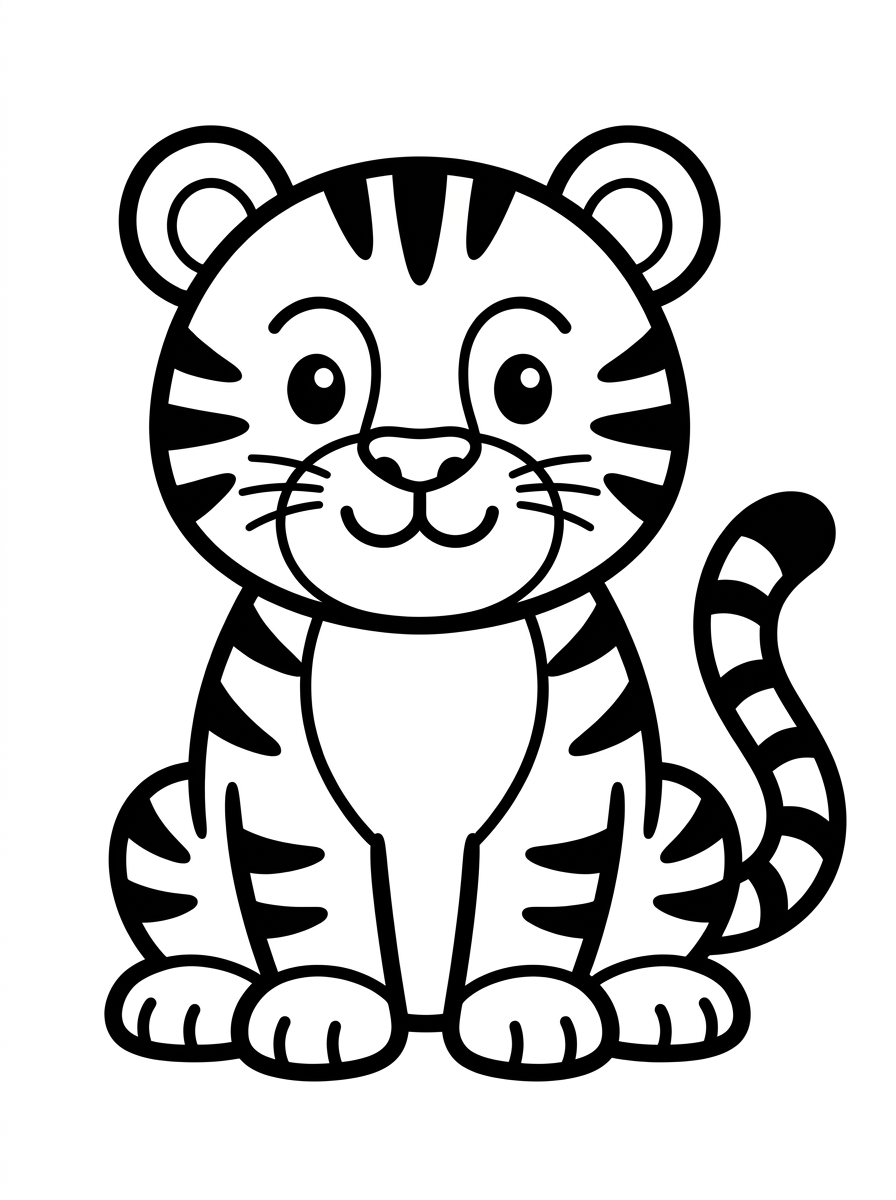
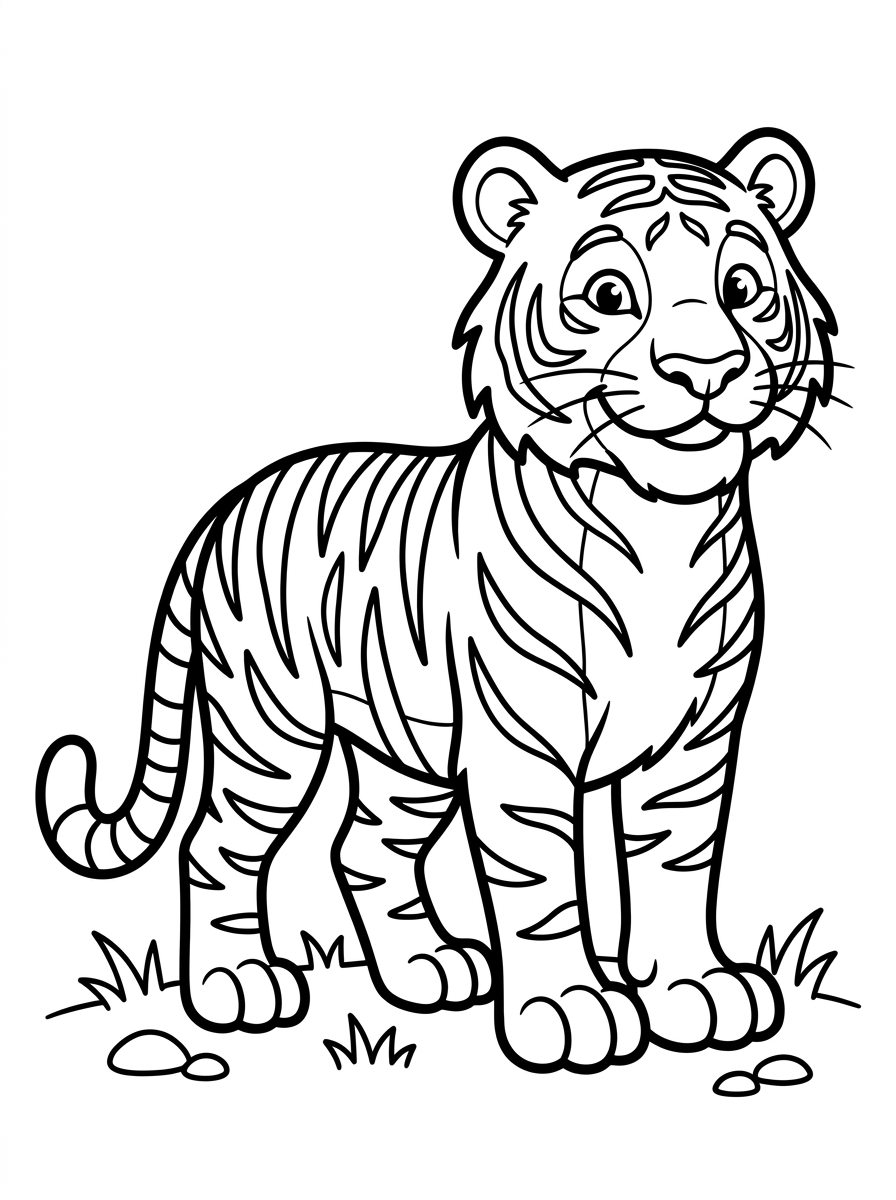
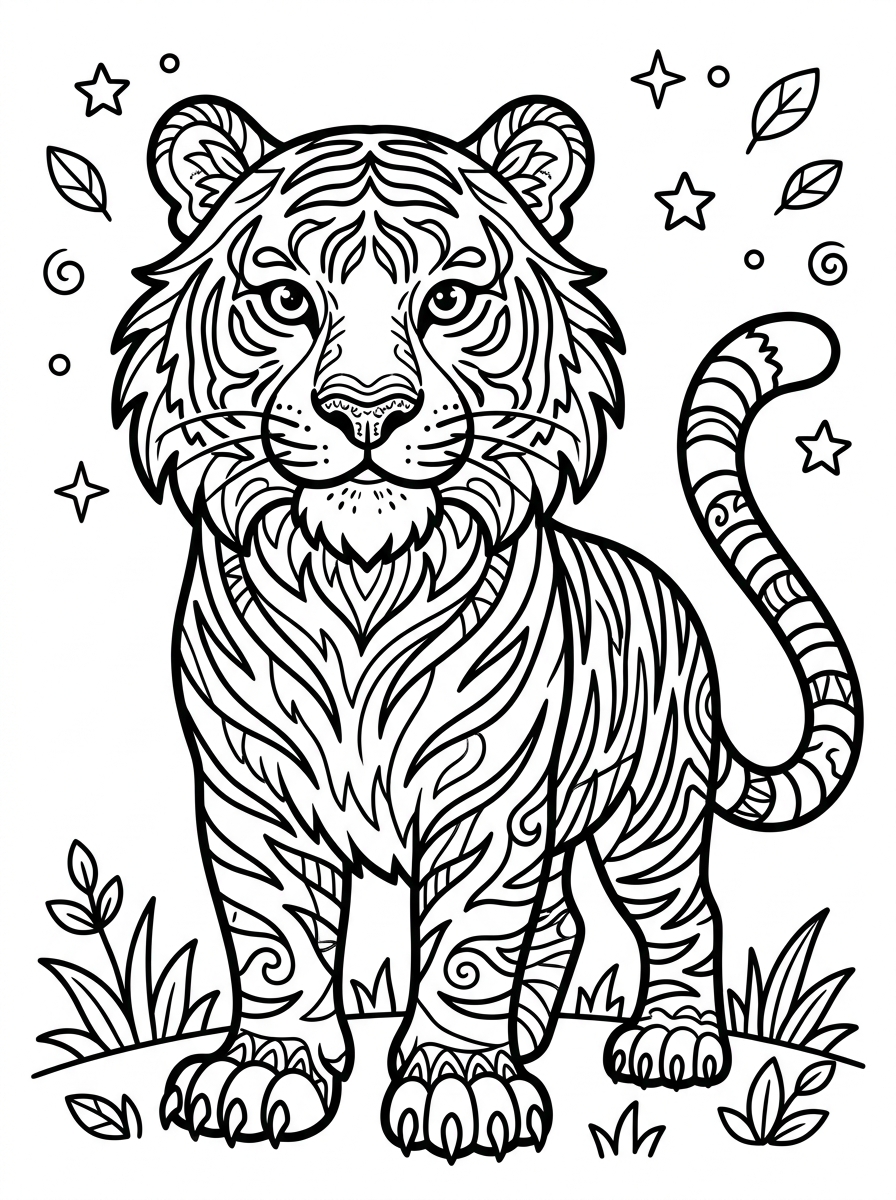
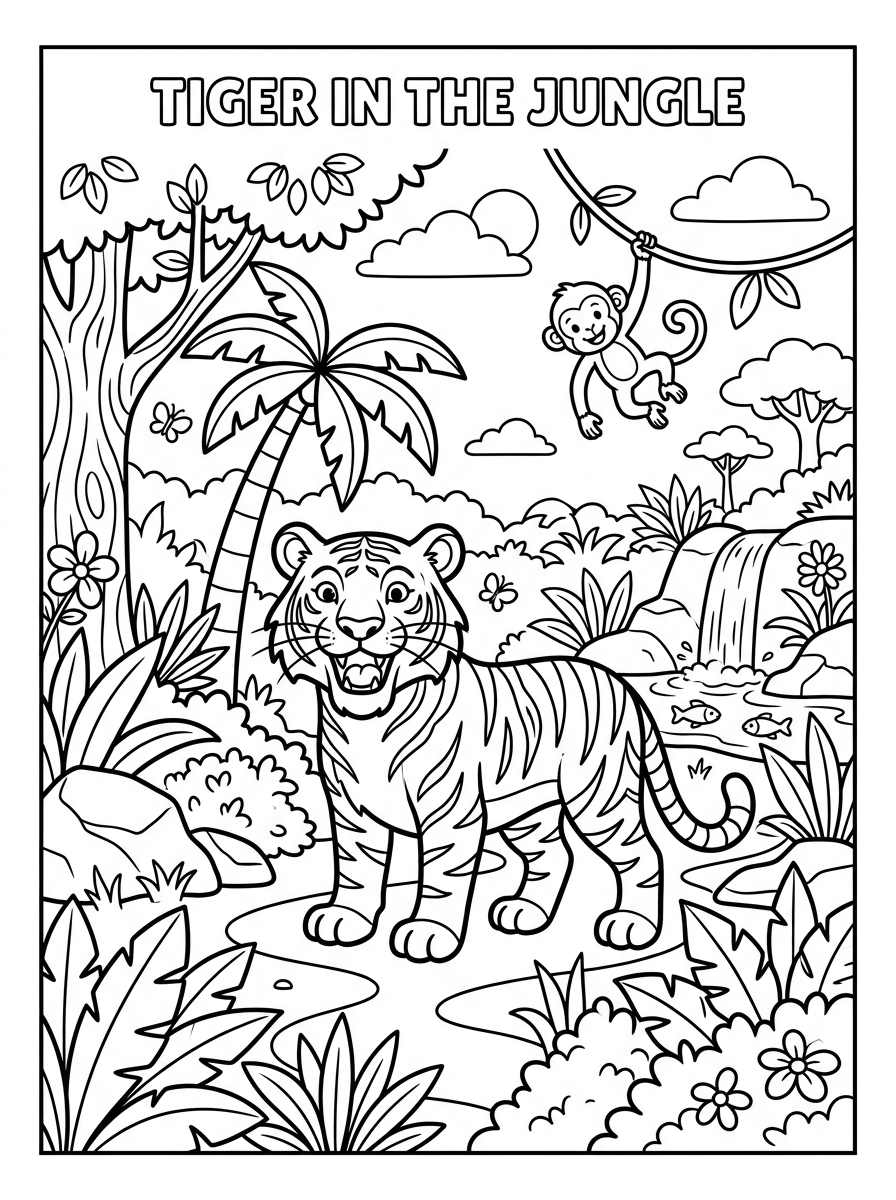
Tigers are the page where pattern matters more than color. The orange-and-black stripes are the whole point, and getting them right — irregular, vertical and never quite symmetric — is what separates a beginner's tiger from a confident one. It's one of the best pages to introduce the idea that coloring is also drawing.
- Habitat
- Forests and grasslands of Asia, from Siberia to India.
- Diet
- Carnivore — deer, wild boar and other large mammals.
- Size
- Large — up to 11 feet long including the tail.
- Best for
- Ages 5+


About this animal
Meet the tiger
Tigers are the page where pattern matters more than color. The orange-and-black stripes are the whole point, and getting them right — irregular, vertical and never quite symmetric — is what separates a beginner's tiger from a confident one. It's one of the best pages to introduce the idea that coloring is also drawing.
- Habitat
- Forests and grasslands of Asia, from Siberia to India.
- Diet
- Carnivore — deer, wild boar and other large mammals.
- Size
- Large — up to 11 feet long including the tail.
Coloring tips
How to color a tiger
Start with a warm orange base across the body, leaving a clear white belly, chin and inner-leg patches. Add black stripes in irregular vertical bands — no two should be identical, and they should follow the shape of the muscle underneath. White Siberian tigers swap the orange for cream or pure white but keep the same stripe rules.
Looking for more variety in the same style? Browse the other safari animals or head back to the full animal hub.
Step-by-step
How to color this tiger
Five short steps that work for any age. Crayons, colored pencils and markers all work — pick whichever your child reaches for first.
Print the page
Save the tiger coloring page to your device, then print it on standard letter or A4 paper. Thicker paper (around 90 gsm or 60 lb) handles markers without bleed-through; regular printer paper is fine for crayons and colored pencils.
Lay down the savanna base
Most safari animals share a warm sandy-gold base coat. Color the whole body with light yellow-tan, then go over it once more so the color is even. Save the chest, belly and inner ears for white or cream.
Plan the pattern
Stripes for tigers and zebras, spots for cheetahs and giraffes, manes for lions — these patterns are what make safari pages exciting. Sketch the pattern in pencil first, then ink over it with a darker color.
Anchor the scene
Add tall yellow-brown grass at the feet and one acacia tree in the background. A pale orange sunset behind the animal turns a flat coloring page into a small wildlife scene.
Finishing touches
When the colors are where you want them, trace the main outlines with a thin black pen to make the tiger pop off the page. Date the back, snap a photo for the family album, then stick the finished page on the fridge.
What you'll need
A quick supplies checklist
Don't have everything? A printer, a piece of paper and a single crayon is enough to get started. The rest is optional.
Printer
Color or black-and-white both work. Set the print size to 'fit to page' and use letter or A4 paper.
Paper
Standard 20 lb (75 gsm) printer paper for crayons; 60+ lb (90+ gsm) for markers so the ink doesn't bleed.
Crayons
Best for ages 3-5 — forgiving on small hands, no smearing, and bright enough to feel finished in minutes.
Colored pencils
Best for ages 6+ and adults — perfect for shading, blending and the detailed pattern variants.
Markers
Bold, fast results. Pair with heavier paper so the ink stays on the page and doesn't soak through.
Did you know?
Fun facts to share while you color
Read these out loud — they turn a 20-minute coloring session into a quick science lesson.
No two tigers have the same stripe pattern — each is as unique as a fingerprint.
Tigers are the largest of all big cats, bigger than lions.
A tiger's stripes are on its skin, not just its fur — shave one and the pattern is still there.
They are powerful swimmers and often cool off in rivers and lakes.
You might also like
Kids who color tigers also like
Lion coloring pages
The lion is the safari page kids reach for first. Males come with a built-in challenge — the mane — that turns an otherwise plain head into a swirling halo of fur. Females are sleeker and a good option for younger children who'd rather color a simpler shape. Either way, the page reads as 'powerful' before a single crayon hits paper.
Cat coloring pages
From sleepy tabbies curled in sunbeams to playful kittens batting at yarn, cats give children one of the most expressive shapes on the page. The mix of long flowing fur, big watchful eyes and distinctive markings makes a cat outline a perfect home for kids who are starting to experiment with stripes, patches and shading.
Panda coloring pages
Pandas are one of the simplest pages a kid can pick up — black and white in fixed places, and a bamboo stalk for company. The simplicity is the appeal: there are very few decisions to make, which means even very young children finish the page feeling like an artist.
Zebra coloring pages
A zebra is a horse-shaped page with a pattern instead of a coat. That makes it surprisingly approachable: kids who already know how to color a horse only need to swap one solid color for a striped one, and the page transforms. It's also a good way to introduce that 'black-and-white' doesn't have to mean 'plain.'
Elephant coloring pages
Elephants are gentle on paper. The body is one of the simplest big shapes in the catalog — a barrel with four columns — which means kids can spend most of their attention on the trunk, ears and tusks. Asian elephants have smaller ears and a more rounded forehead; African elephants have wide ears that look almost like the shape of the continent.
Giraffe coloring pages
Giraffes are the page kids want when they're ready to take their time. The body is mostly neck and the neck is mostly pattern, which makes the giraffe the savanna's answer to a mandala. The trick is keeping the spots irregular enough to look natural — not a checkerboard, not perfectly round.
Safari animals
More safari animals coloring pages
Safari pages are where coloring gets exciting: manes to comb, stripes to plan, spots to map out across a giraffe’s neck. They're a small step up in difficulty and a great way to introduce kids to habitats far from home without leaving the kitchen table.
FAQ
Tiger coloring pages — FAQ
- Are these tiger coloring pages free to print?
- Yes — every tiger coloring page on this site is free to download, print and color for personal, classroom and library use. No watermark, no signup.
- What age are tiger coloring pages best for?
- Ages 5+. It's one of the best pages to introduce the idea that coloring is also drawing.
- What colors should I use for a tiger?
- Start with a warm orange base across the body, leaving a clear white belly, chin and inner-leg patches. Add black stripes in irregular vertical bands — no two should be identical, and they should follow the shape of the muscle underneath. White Siberian tigers swap the orange for cream or pure white but keep the same stripe rules.
- What do tigers eat and where do they live?
- Carnivore — deer, wild boar and other large mammals. Forests and grasslands of Asia, from Siberia to India.
- What other animals are similar to a tiger?
- Try our lion, cat, panda coloring pages — kids who finish a tiger page usually enjoy those next.
Looking for something else?
Browse all 41 animals in the catalog — pets, farm, safari, forest, birds, ocean and insects.
All animal coloring pages