Octopus coloring pages
Free printable octopuses · Ages 5+
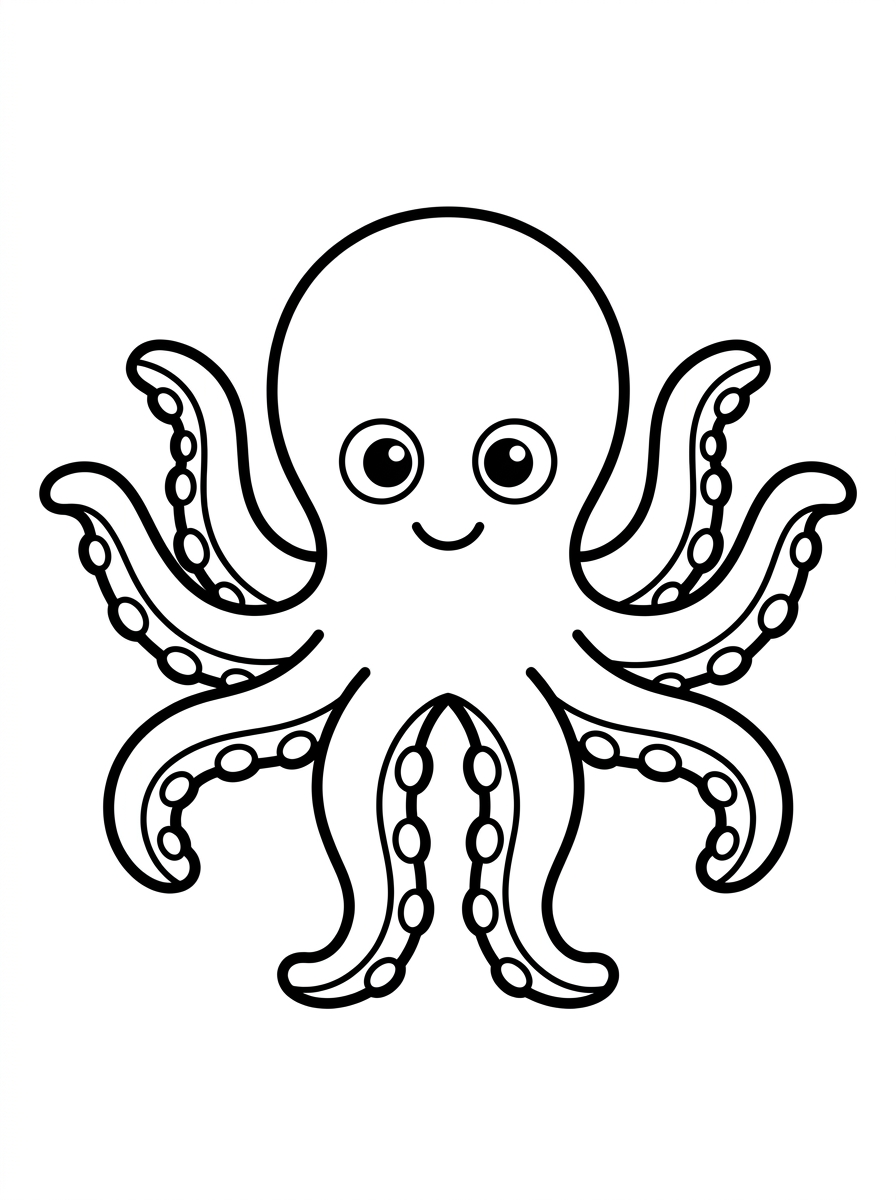
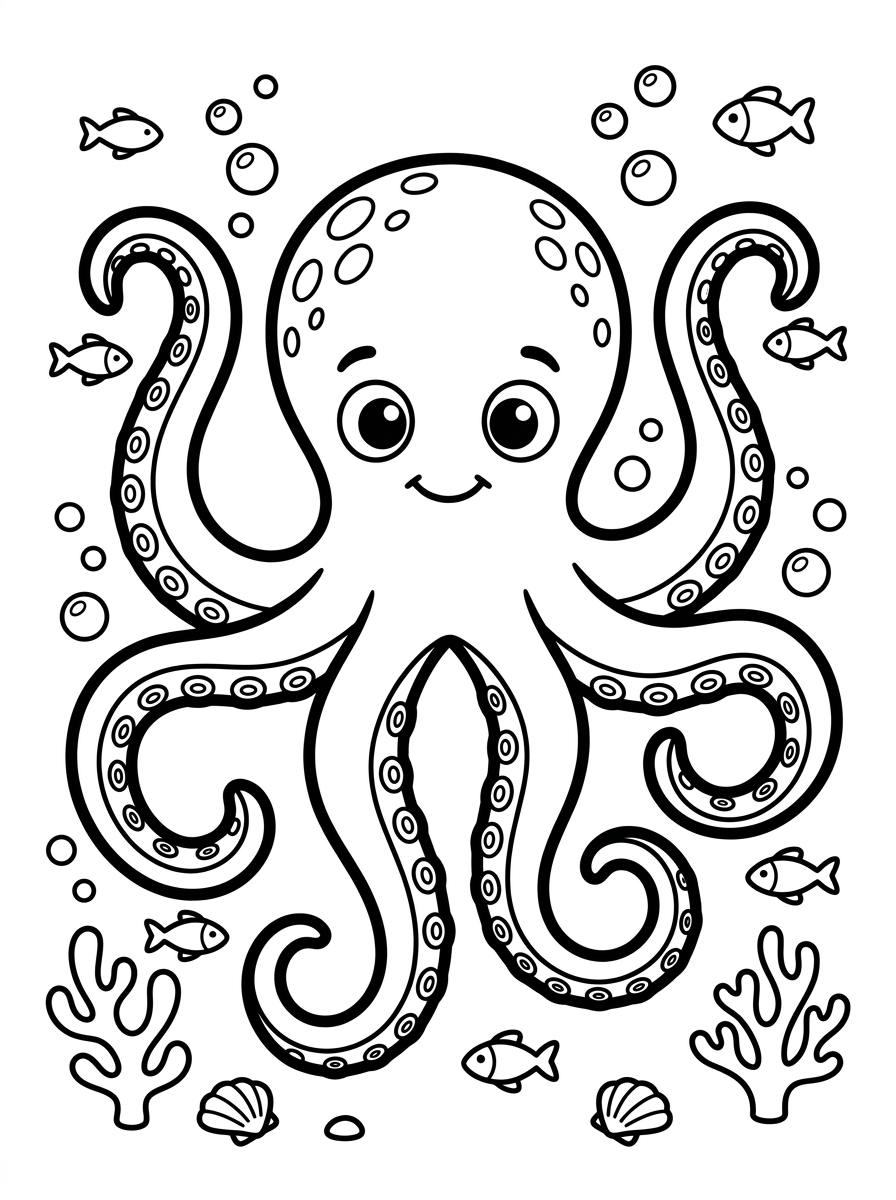
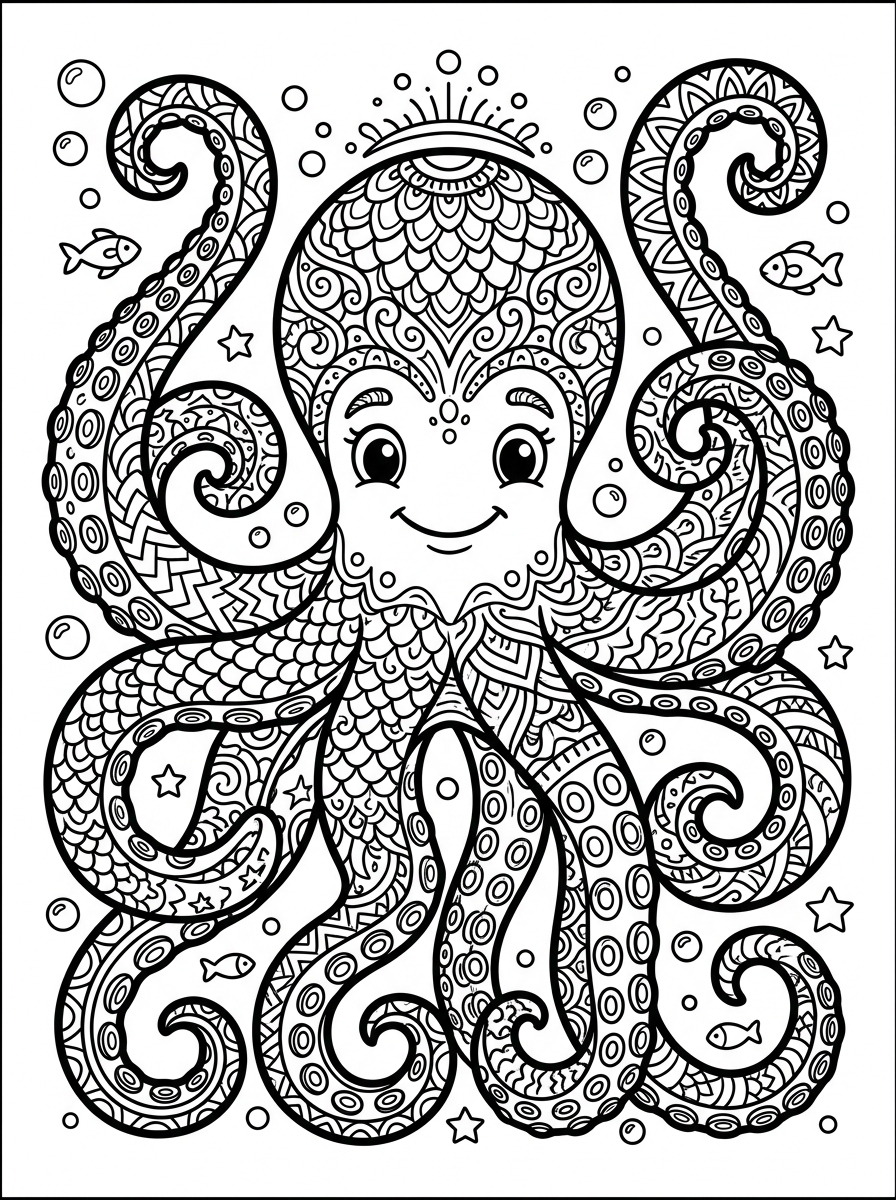
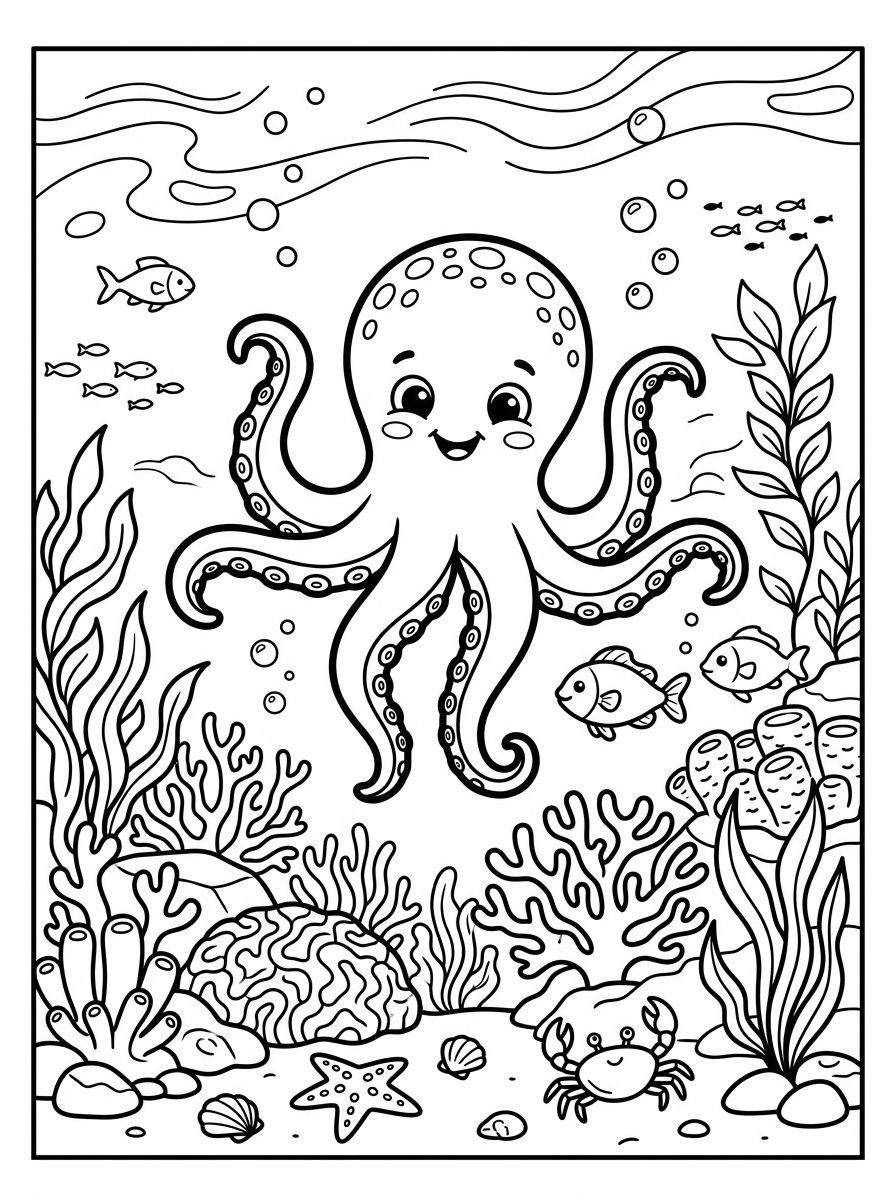
An octopus is the page where coloring crosses into pattern-making. Eight arms studded with suction cups, a bulbous head and the option to use almost any color (octopuses can change color in real life) makes this one of the more creative pages in the catalog. It's a favorite among older kids and adults.
- Habitat
- Reefs, rocks and seafloors of every ocean.
- Diet
- Carnivore — crabs, shrimp, fish and shellfish.
- Size
- Small (palm-sized) to large (giant Pacific octopus, 16 ft arm span).
- Best for
- Ages 5+


About this animal
Meet the octopus
An octopus is the page where coloring crosses into pattern-making. Eight arms studded with suction cups, a bulbous head and the option to use almost any color (octopuses can change color in real life) makes this one of the more creative pages in the catalog. It's a favorite among older kids and adults.
- Habitat
- Reefs, rocks and seafloors of every ocean.
- Diet
- Carnivore — crabs, shrimp, fish and shellfish.
- Size
- Small (palm-sized) to large (giant Pacific octopus, 16 ft arm span).
Coloring tips
How to color a octopus
Don't fight the urge to be wild — octopuses naturally come in purples, oranges, reds, browns and grays. Pick one base color, then add small dots of contrast along the arms to suggest the texture of skin that changes. Each arm has two rows of suction cups; leaving them slightly lighter than the arm itself adds depth.
Looking for more variety in the same style? Browse the other ocean & sea animals or head back to the full animal hub.
Step-by-step
How to color this octopus
Five short steps that work for any age. Crayons, colored pencils and markers all work — pick whichever your child reaches for first.
Print the page
Save the octopus coloring page to your device, then print it on standard letter or A4 paper. Thicker paper (around 90 gsm or 60 lb) handles markers without bleed-through; regular printer paper is fine for crayons and colored pencils.
Color the sea creature first
Pick the natural color: gray for sharks and dolphins, soft purples or oranges for octopuses, green for sea turtles. Fill the body smoothly, leaving the belly a paler shade for counter-shading.
Add water around the animal
Fill the background with light blue, leaving a few wavy white lines for ocean ripples. Don’t worry about being neat — water is forgiving on a coloring page.
Drop in a couple of details
A small fish swimming past, a few green seaweed strands at the bottom, or a coral cluster behind the main animal turns a single subject into an underwater scene.
Finishing touches
When the colors are where you want them, trace the main outlines with a thin black pen to make the octopus pop off the page. Date the back, snap a photo for the family album, then stick the finished page on the fridge.
What you'll need
A quick supplies checklist
Don't have everything? A printer, a piece of paper and a single crayon is enough to get started. The rest is optional.
Printer
Color or black-and-white both work. Set the print size to 'fit to page' and use letter or A4 paper.
Paper
Standard 20 lb (75 gsm) printer paper for crayons; 60+ lb (90+ gsm) for markers so the ink doesn't bleed.
Crayons
Best for ages 3-5 — forgiving on small hands, no smearing, and bright enough to feel finished in minutes.
Colored pencils
Best for ages 6+ and adults — perfect for shading, blending and the detailed pattern variants.
Markers
Bold, fast results. Pair with heavier paper so the ink stays on the page and doesn't soak through.
Did you know?
Fun facts to share while you color
Read these out loud — they turn a 20-minute coloring session into a quick science lesson.
Octopuses have three hearts and blue, copper-based blood.
Each arm has its own mini-brain — they can solve problems independently.
Octopuses can change color and skin texture in less than a second.
They can squeeze through any gap larger than their beak — the only hard part of their body.
You might also like
Kids who color octopuses also like
Shark coloring pages
Sharks are the ocean group's blockbuster. The triangular dorsal fin, streamlined body and toothy mouth are some of the most recognizable shapes in any coloring catalog. Younger kids gravitate to friendlier-looking cartoon styles; older kids enjoy the realistic detail — gill slits, lateral line, two-tone counter-shading.
Dolphin coloring pages
Dolphins are the friendly counterpart to sharks in the ocean group. The smooth curved body, permanent half-smile and frequent leaping pose make the page feel cheerful from the start. They're also one of the cleanest shapes in the catalog — almost no fur or scales, no fussy detail, just lines and curves.
Seahorse coloring pages
Seahorses are one of the smallest and strangest animals you can color. The horse-like head, curled tail and ridged body are unmistakable, and the small scale gives kids room to add coral, bubbles and seagrass without making the page feel crowded.
Turtle coloring pages
Turtles bridge the ocean and the land. The shell is the page's main feature — a built-in mandala of plates and patterns that asks kids to slow down and color section by section. The rest of the body (four flippers or four legs, plus the head) is small and quick, which keeps the page balanced.
Whale coloring pages
Whales are the largest animal that has ever lived, and the coloring page reflects that — usually one enormous shape filling the page, sometimes with a small boat or fish nearby for scale. The simplicity is the point: a blue whale is a giant smooth body with very few features, which makes the page approachable for very young kids.
Ocean & sea animals
More ocean & sea animals coloring pages
Ocean pages give kids permission to use the bluest blue and the most outrageous turquoise in the box. The animals themselves come in calmer shapes (whale, dolphin) and weirder ones (octopus, seahorse), so this group works for everyone from toddlers to teens.
FAQ
Octopus coloring pages — FAQ
- Are these octopus coloring pages free to print?
- Yes — every octopus coloring page on this site is free to download, print and color for personal, classroom and library use. No watermark, no signup.
- What age are octopus coloring pages best for?
- Ages 5+. It's a favorite among older kids and adults.
- What colors should I use for a octopus?
- Don't fight the urge to be wild — octopuses naturally come in purples, oranges, reds, browns and grays. Pick one base color, then add small dots of contrast along the arms to suggest the texture of skin that changes. Each arm has two rows of suction cups; leaving them slightly lighter than the arm itself adds depth.
- What do octopuses eat and where do they live?
- Carnivore — crabs, shrimp, fish and shellfish. Reefs, rocks and seafloors of every ocean.
- What other animals are similar to a octopus?
- Try our shark, dolphin, seahorse coloring pages — kids who finish a octopus page usually enjoy those next.
Looking for something else?
Browse all 41 animals in the catalog — pets, farm, safari, forest, birds, ocean and insects.
All animal coloring pages