Koala coloring pages
Free printable koalas · Ages 3+
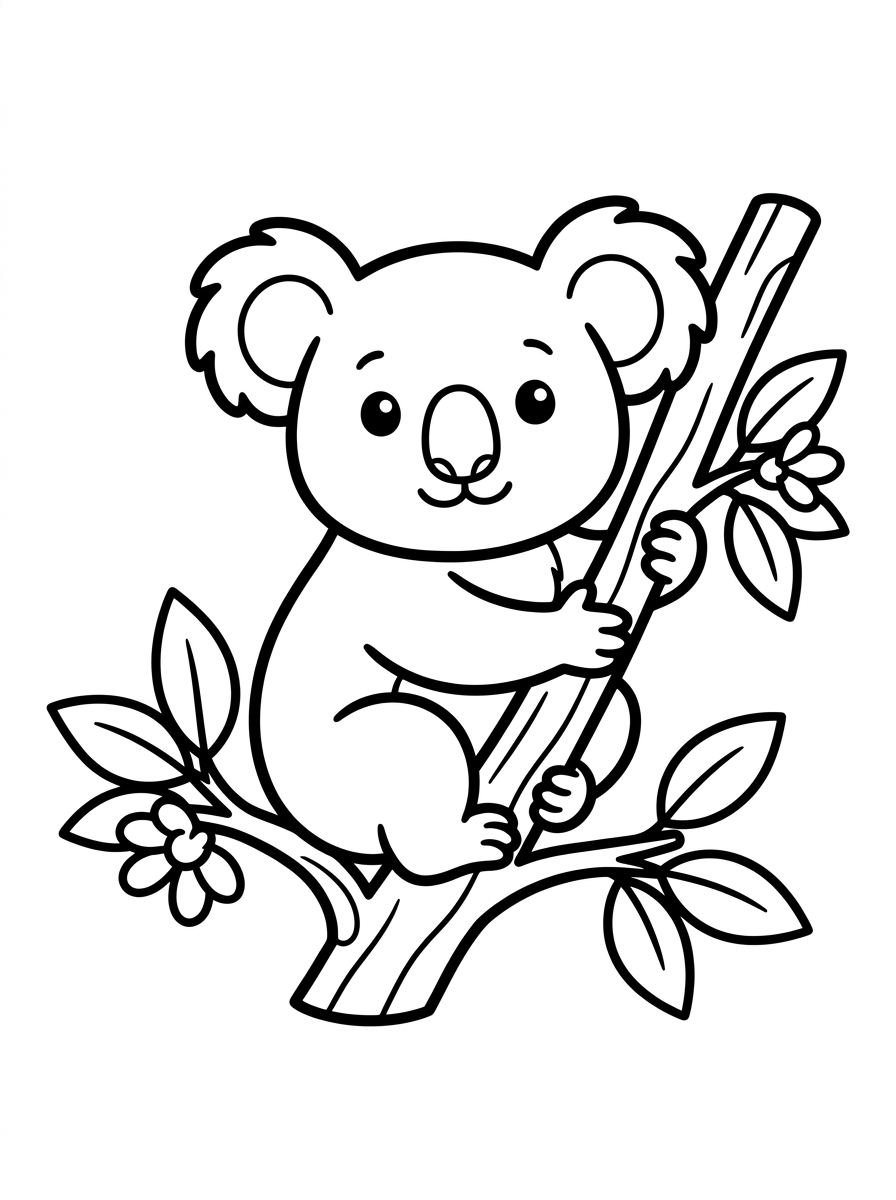
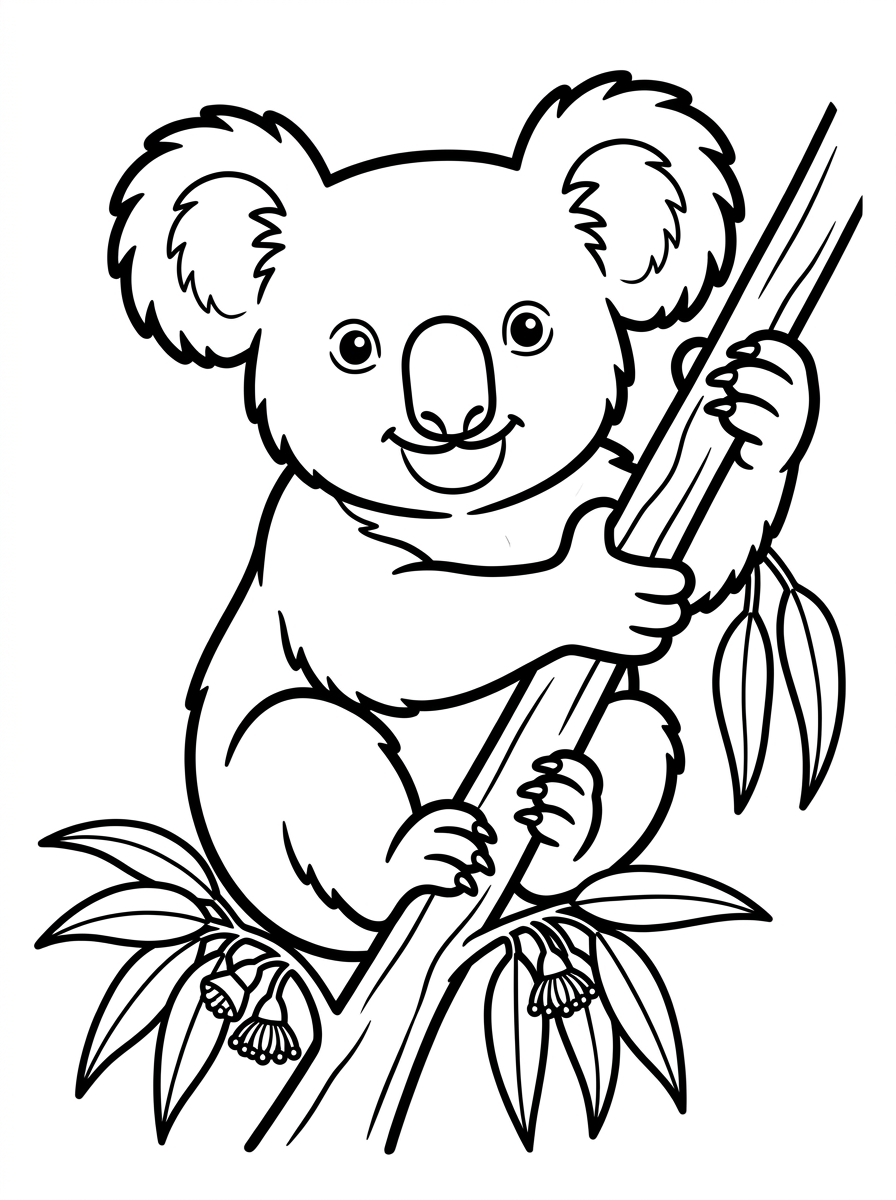
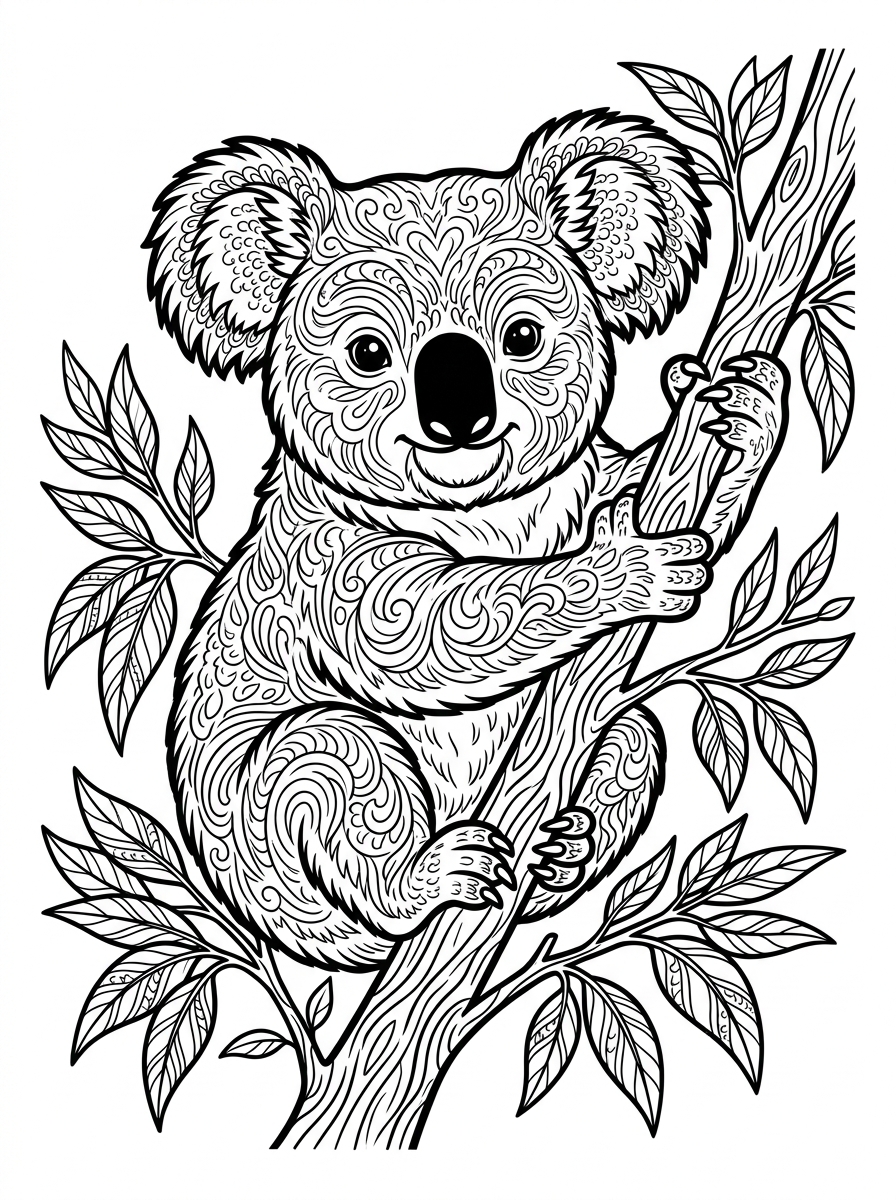
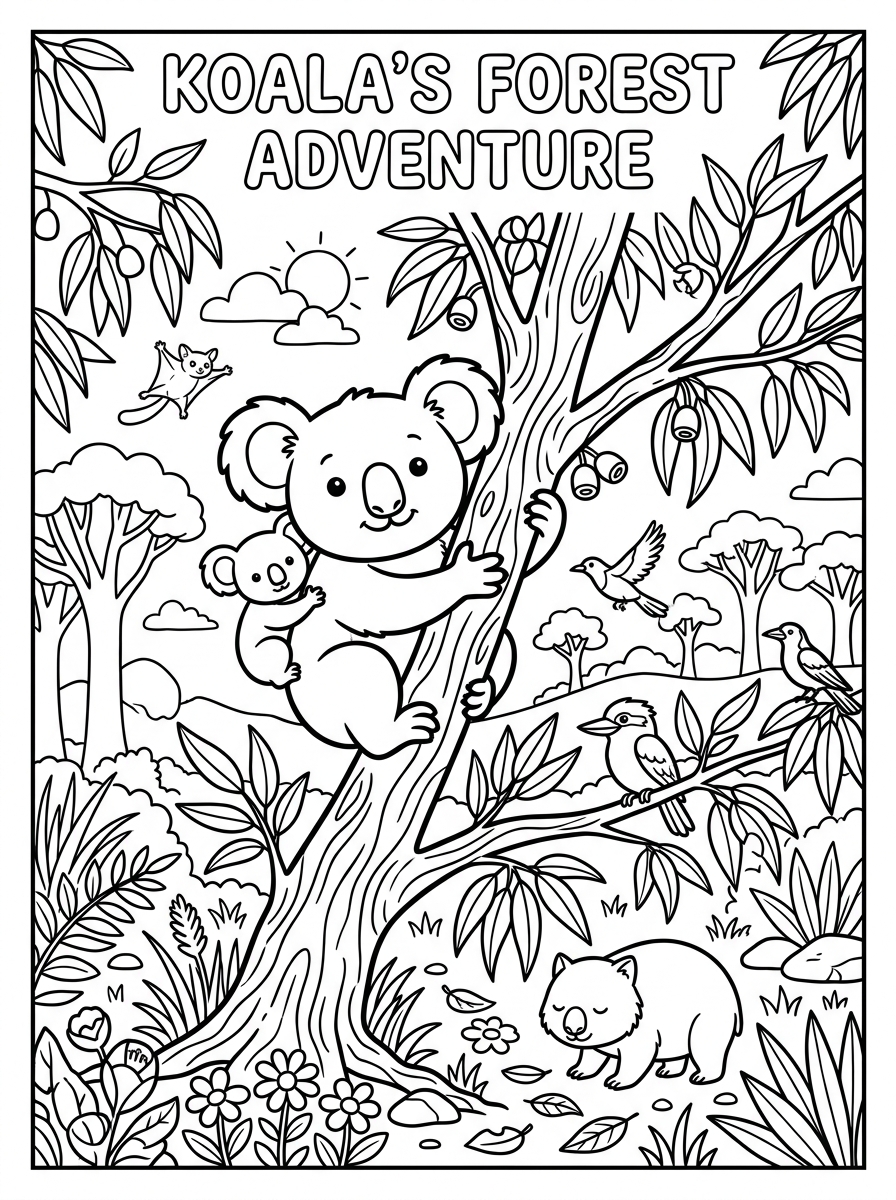
Koalas are the kangaroo's couch-potato neighbor and one of the friendliest-looking pages in this group. The round face, large fluffy ears and clinging-to-a-branch pose are nearly always the same — which makes the page approachable for very young kids and a quick win for anyone who wants a 'finished' look fast.
- Habitat
- Eucalyptus forests of eastern Australia.
- Diet
- Herbivore — almost exclusively eucalyptus leaves.
- Size
- Small — about 2 ft tall, 20 lbs.
- Best for
- Ages 3+


About this animal
Meet the koala
Koalas are the kangaroo's couch-potato neighbor and one of the friendliest-looking pages in this group. The round face, large fluffy ears and clinging-to-a-branch pose are nearly always the same — which makes the page approachable for very young kids and a quick win for anyone who wants a 'finished' look fast.
- Habitat
- Eucalyptus forests of eastern Australia.
- Diet
- Herbivore — almost exclusively eucalyptus leaves.
- Size
- Small — about 2 ft tall, 20 lbs.
Coloring tips
How to color a koala
Use soft gray across the body, with white on the chest, inside the ears and on the cheeks. The large black button nose is the page's anchor — color it solid and almost glossy. A eucalyptus branch in two greens (lighter for the leaves, darker for the stems) completes the scene.
Looking for more variety in the same style? Browse the other forest & wild animals or head back to the full animal hub.
Step-by-step
How to color this koala
Five short steps that work for any age. Crayons, colored pencils and markers all work — pick whichever your child reaches for first.
Print the page
Save the koala coloring page to your device, then print it on standard letter or A4 paper. Thicker paper (around 90 gsm or 60 lb) handles markers without bleed-through; regular printer paper is fine for crayons and colored pencils.
Choose a forest-floor coat
Most forest and wild animals wear earth tones: warm browns for foxes and bears, gray for wolves, soft pink for pandas’ ears. Fill the body with the base shade, then leave belly, chest and inner ears for white.
Sketch the fur texture
Wild coats have visible fur direction — short strokes along the body in a slightly darker brown make the animal look real. Concentrate the strokes along the spine, shoulders and tail.
Build a wooded background
A few vertical tree trunks behind the animal, a scatter of leaves on the ground, and a soft blue-gray sky between the trunks fills the page out. Keep all background colors muted so the animal stays the focal point.
Finishing touches
When the colors are where you want them, trace the main outlines with a thin black pen to make the koala pop off the page. Date the back, snap a photo for the family album, then stick the finished page on the fridge.
What you'll need
A quick supplies checklist
Don't have everything? A printer, a piece of paper and a single crayon is enough to get started. The rest is optional.
Printer
Color or black-and-white both work. Set the print size to 'fit to page' and use letter or A4 paper.
Paper
Standard 20 lb (75 gsm) printer paper for crayons; 60+ lb (90+ gsm) for markers so the ink doesn't bleed.
Crayons
Best for ages 3-5 — forgiving on small hands, no smearing, and bright enough to feel finished in minutes.
Colored pencils
Best for ages 6+ and adults — perfect for shading, blending and the detailed pattern variants.
Markers
Bold, fast results. Pair with heavier paper so the ink stays on the page and doesn't soak through.
Did you know?
Fun facts to share while you color
Read these out loud — they turn a 20-minute coloring session into a quick science lesson.
Koalas sleep up to 22 hours a day.
They aren't bears — they're marsupials, more closely related to kangaroos.
Their fingerprints are nearly identical to human ones.
An adult koala eats up to 2 lbs of eucalyptus leaves daily.
You might also like
Kids who color koalas also like
Kangaroo coloring pages
Kangaroos are a chance for kids to color something with a body plan that looks unlike any other animal in the catalog: huge hind legs, small forearms and a thick tail used like a third leg. Add a joey peeking out of the pouch and you've got two animals on the page for the price of one.
Panda coloring pages
Pandas are one of the simplest pages a kid can pick up — black and white in fixed places, and a bamboo stalk for company. The simplicity is the appeal: there are very few decisions to make, which means even very young children finish the page feeling like an artist.
Monkey coloring pages
Monkeys are the safari group's wild card. They're shaped like small people, which makes the face the most expressive in the catalog, and the long tail wraps around branches in ways that create instant scene-building. Pair one with a banana and the page is finished without any background work at all.
Bear coloring pages
Bears walk a careful line on the page: cuddly enough for storybook covers, large enough to feel a little dangerous. Most bear coloring pages lean into the storybook side, which means soft round bodies and friendly faces. A salmon, a beehive or a honey pot turns one bear into a whole scene.
Rabbit coloring pages
Rabbits are the rare animal that's equally at home on an Easter card, a fairy-tale page and a realistic nature scene. The long ears and crouched posture give kids a recognizable silhouette that's hard to color wrong. They're also one of the only popular subjects where white is the most realistic choice — useful for teaching kids that 'leave it blank' is a real coloring decision.
Wolf coloring pages
Wolves give kids the chance to color something that looks like a dog but feels like something wilder. The body shape is similar enough to a dog that the page is easy to start, but the longer legs, narrower muzzle and intense yellow eyes ask for slightly more careful work. Pair one with a full moon and you've got a complete page.
Forest & wild animals
More forest & wild animals coloring pages
Forest and woodland animals balance familiarity (you might see a fox in the backyard) with the thrill of the wild. Most have rich coats with two or three natural colors, which makes them ideal for kids who are ready to layer crayons or blend pencils.
FAQ
Koala coloring pages — FAQ
- Are these koala coloring pages free to print?
- Yes — every koala coloring page on this site is free to download, print and color for personal, classroom and library use. No watermark, no signup.
- What age are koala coloring pages best for?
- Ages 3+. The round face, large fluffy ears and clinging-to-a-branch pose are nearly always the same — which makes the page approachable for very young kids and a quick win for anyone who wants a 'finished' look fast.
- What colors should I use for a koala?
- Use soft gray across the body, with white on the chest, inside the ears and on the cheeks. The large black button nose is the page's anchor — color it solid and almost glossy. A eucalyptus branch in two greens (lighter for the leaves, darker for the stems) completes the scene.
- What do koalas eat and where do they live?
- Herbivore — almost exclusively eucalyptus leaves. Eucalyptus forests of eastern Australia.
- What other animals are similar to a koala?
- Try our kangaroo, panda, monkey coloring pages — kids who finish a koala page usually enjoy those next.
Looking for something else?
Browse all 41 animals in the catalog — pets, farm, safari, forest, birds, ocean and insects.
All animal coloring pages