Hamster coloring pages
Free printable hamsters · Ages 3+
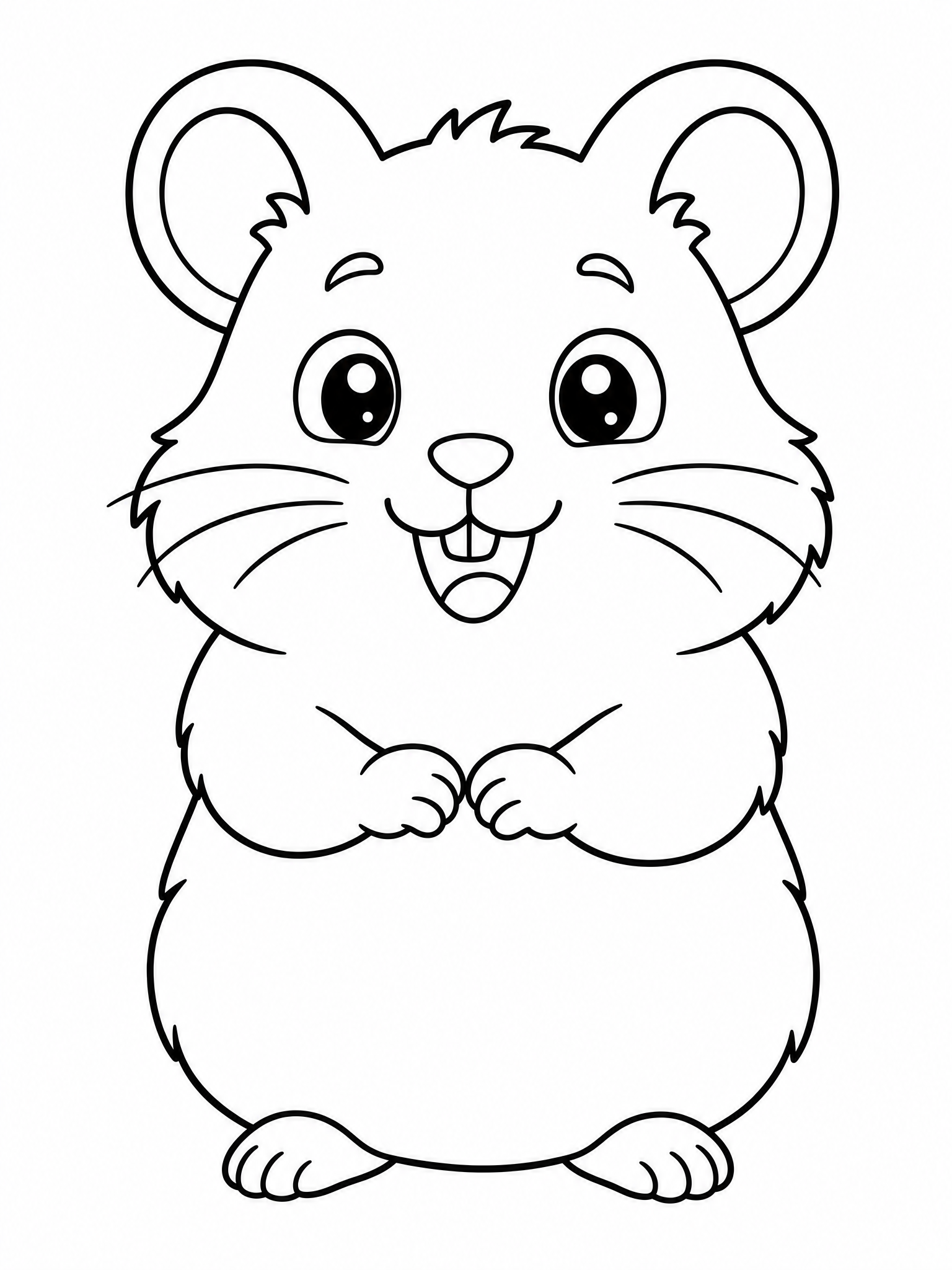
Hamsters are the smallest pet on this list and the page reflects it — round bodies, tiny feet and cheeks that almost always look stuffed with food. Their compact shape is forgiving for very young children, and the limited number of distinct features (eyes, ears, nose, paws) means there are fewer places for a marker to slip.
- Habitat
- Originally Syria and Eastern Europe — now kept worldwide as pets.
- Diet
- Omnivore — seeds, grains, vegetables and occasional insects.
- Size
- Tiny — 2 to 7 inches depending on species.
- Best for
- Ages 3+



About this animal
Meet the hamster
Hamsters are the smallest pet on this list and the page reflects it — round bodies, tiny feet and cheeks that almost always look stuffed with food. Their compact shape is forgiving for very young children, and the limited number of distinct features (eyes, ears, nose, paws) means there are fewer places for a marker to slip.
- Habitat
- Originally Syria and Eastern Europe — now kept worldwide as pets.
- Diet
- Omnivore — seeds, grains, vegetables and occasional insects.
- Size
- Tiny — 2 to 7 inches depending on species.
Coloring tips
How to color a hamster
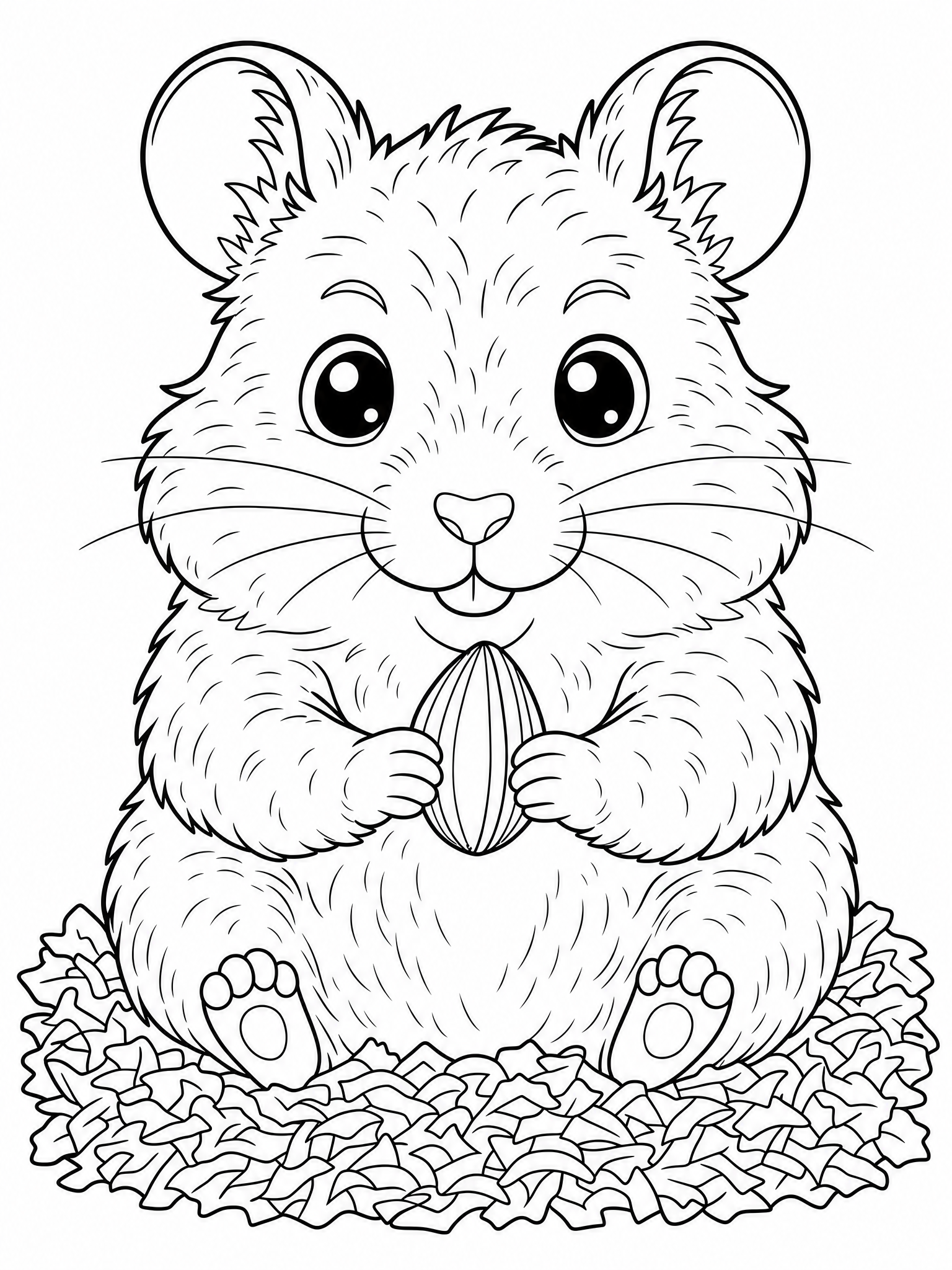
Most pet hamsters are golden or honey-colored across the back with a white belly. Syrian hamsters often have a darker stripe running from the cheeks to the shoulder — keep an eye on that detail if you're going for realism. A few sunflower seeds drawn in the paws give the page a built-in story.
Looking for more variety in the same style? Browse the other pets or head back to the full animal hub.
Step-by-step
How to color this hamster
Five short steps that work for any age. Crayons, colored pencils and markers all work — pick whichever your child reaches for first.
Print the page
Save the hamster coloring page to your device, then print it on standard letter or A4 paper. Thicker paper (around 90 gsm or 60 lb) handles markers without bleed-through; regular printer paper is fine for crayons and colored pencils.
Start with the body
Choose the natural coat color for the pet — warm tan, gray, white or black work for most breeds. Fill the main body shape first with light, even strokes, working from the head down toward the tail.
Layer the markings
Add stripes, patches or spots on top of the base coat using a slightly darker shade. Pets almost never have one flat color in real life, so a second layer immediately makes the page look more alive.
Bring the face to life
Color the eyes a soft amber, green or blue, give the nose a dark pink-to-black tone, and leave the whiskers untouched. The face carries the personality of any pet drawing — slow down here.
Finishing touches
When the colors are where you want them, trace the main outlines with a thin black pen to make the hamster pop off the page. Date the back, snap a photo for the family album, then stick the finished page on the fridge.
What you'll need
A quick supplies checklist
Don't have everything? A printer, a piece of paper and a single crayon is enough to get started. The rest is optional.
Printer
Color or black-and-white both work. Set the print size to 'fit to page' and use letter or A4 paper.
Paper
Standard 20 lb (75 gsm) printer paper for crayons; 60+ lb (90+ gsm) for markers so the ink doesn't bleed.
Crayons
Best for ages 3-5 — forgiving on small hands, no smearing, and bright enough to feel finished in minutes.
Colored pencils
Best for ages 6+ and adults — perfect for shading, blending and the detailed pattern variants.
Markers
Bold, fast results. Pair with heavier paper so the ink stays on the page and doesn't soak through.
Did you know?
Fun facts to share while you color
Read these out loud — they turn a 20-minute coloring session into a quick science lesson.
A hamster's cheek pouches can stretch all the way back to its hips when packed with food.
They're nocturnal — most of their running, eating and grooming happens at night.
Hamsters can run up to 5 miles on a wheel in a single night.
The name 'hamster' comes from the German word hamstern, meaning 'to hoard.'
You might also like
Kids who color hamsters also like
Rabbit coloring pages
Rabbits are the rare animal that's equally at home on an Easter card, a fairy-tale page and a realistic nature scene. The long ears and crouched posture give kids a recognizable silhouette that's hard to color wrong. They're also one of the only popular subjects where white is the most realistic choice — useful for teaching kids that 'leave it blank' is a real coloring decision.
Guinea pig coloring pages
Guinea pigs sit somewhere between a hamster and a rabbit — bigger than the first, more relaxed than the second. Their fur can be short and smooth or long and shaggy (Peruvian) or even swirled into rosettes (Abyssinian), which gives any coloring set a built-in opportunity for variety.
Squirrel coloring pages
Squirrels are a backyard staple and one of the few wild animals most kids see almost every day. The fluffy tail (held in a question-mark curl above the body) is the showpiece of the page — and the acorn or pinecone in the paws gives the animal something to do without needing a background.
Cat coloring pages
From sleepy tabbies curled in sunbeams to playful kittens batting at yarn, cats give children one of the most expressive shapes on the page. The mix of long flowing fur, big watchful eyes and distinctive markings makes a cat outline a perfect home for kids who are starting to experiment with stripes, patches and shading.
Dog coloring pages
No animal lands on more coloring pages than the dog — and for good reason. Breed shapes vary enormously (think bulldog vs. dachshund vs. poodle), which gives kids a chance to color the same animal twenty different ways without it ever feeling repetitive. Friendly faces and floppy ears keep the pages accessible from preschool up.
Pets
More pets coloring pages
Pet coloring pages are usually the first ones kids ask for, because the animals on the page are the ones curled up on the couch. They sit on the easier end of the difficulty curve — round bodies, friendly faces, lots of fur to fill in with a single color.
FAQ
Hamster coloring pages — FAQ
- Are these hamster coloring pages free to print?
- Yes — every hamster coloring page on this site is free to download, print and color for personal, classroom and library use. No watermark, no signup.
- What age are hamster coloring pages best for?
- Ages 3+. Their compact shape is forgiving for very young children, and the limited number of distinct features (eyes, ears, nose, paws) means there are fewer places for a marker to slip.
- What colors should I use for a hamster?
- Most pet hamsters are golden or honey-colored across the back with a white belly. Syrian hamsters often have a darker stripe running from the cheeks to the shoulder — keep an eye on that detail if you're going for realism. A few sunflower seeds drawn in the paws give the page a built-in story.
- What do hamsters eat and where do they live?
- Omnivore — seeds, grains, vegetables and occasional insects. Originally Syria and Eastern Europe — now kept worldwide as pets.
- What other animals are similar to a hamster?
- Try our rabbit, guinea pig, squirrel coloring pages — kids who finish a hamster page usually enjoy those next.
Looking for something else?
Browse all 41 animals in the catalog — pets, farm, safari, forest, birds, ocean and insects.
All animal coloring pages