Duck coloring pages
Free printable ducks · All ages
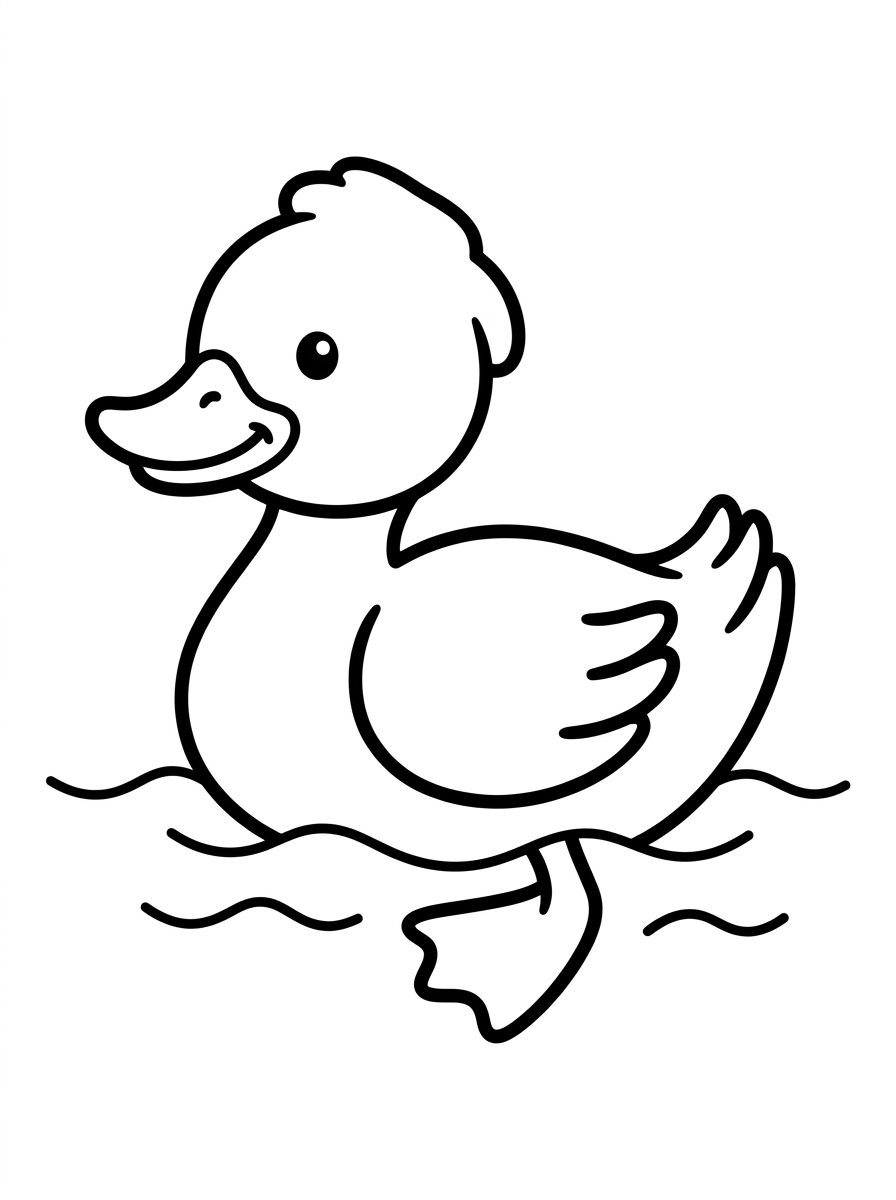
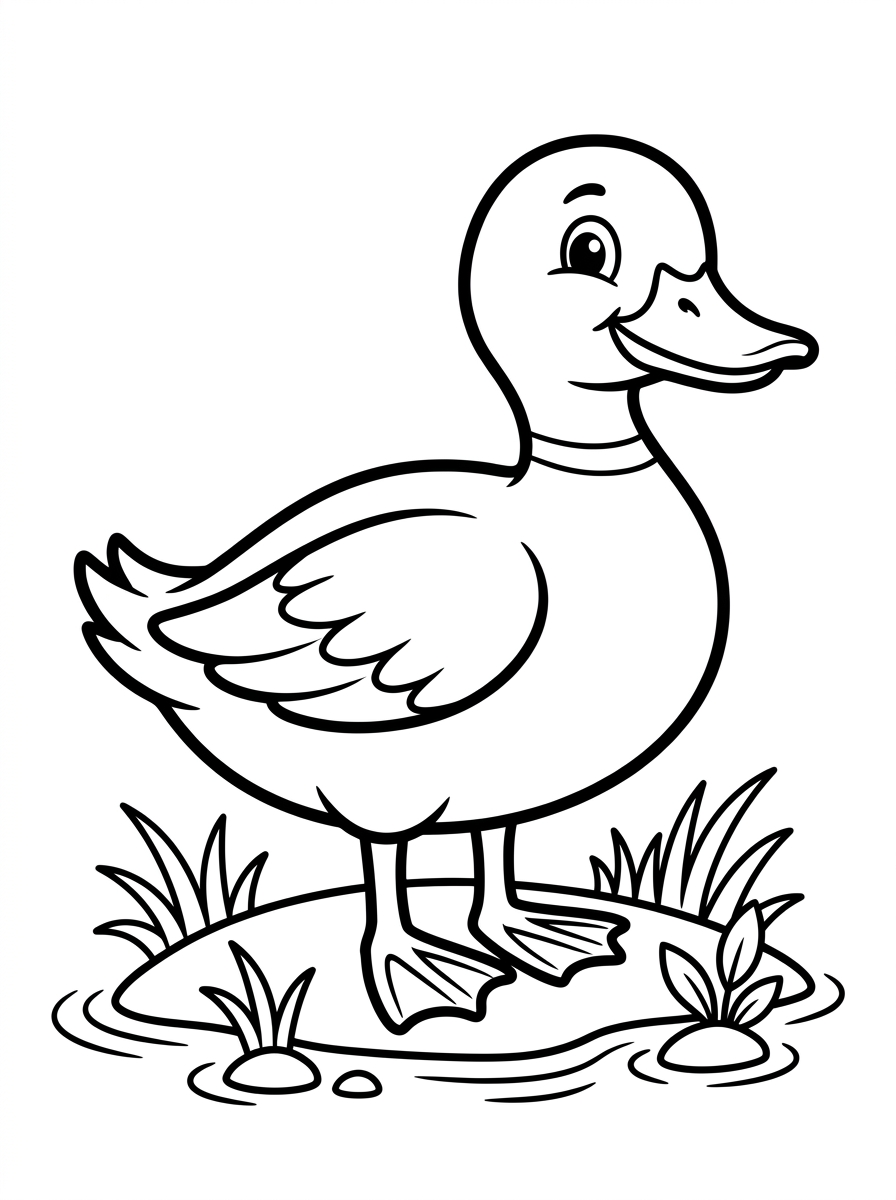
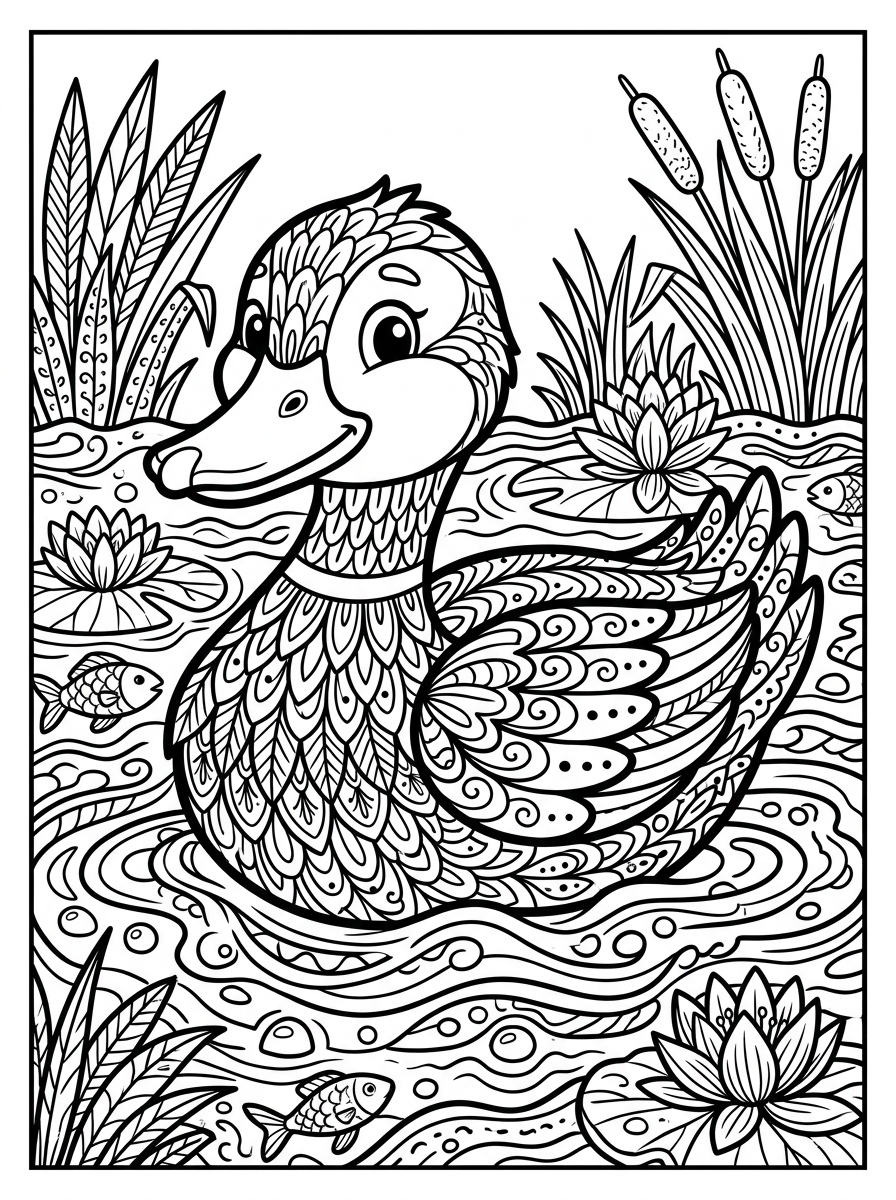
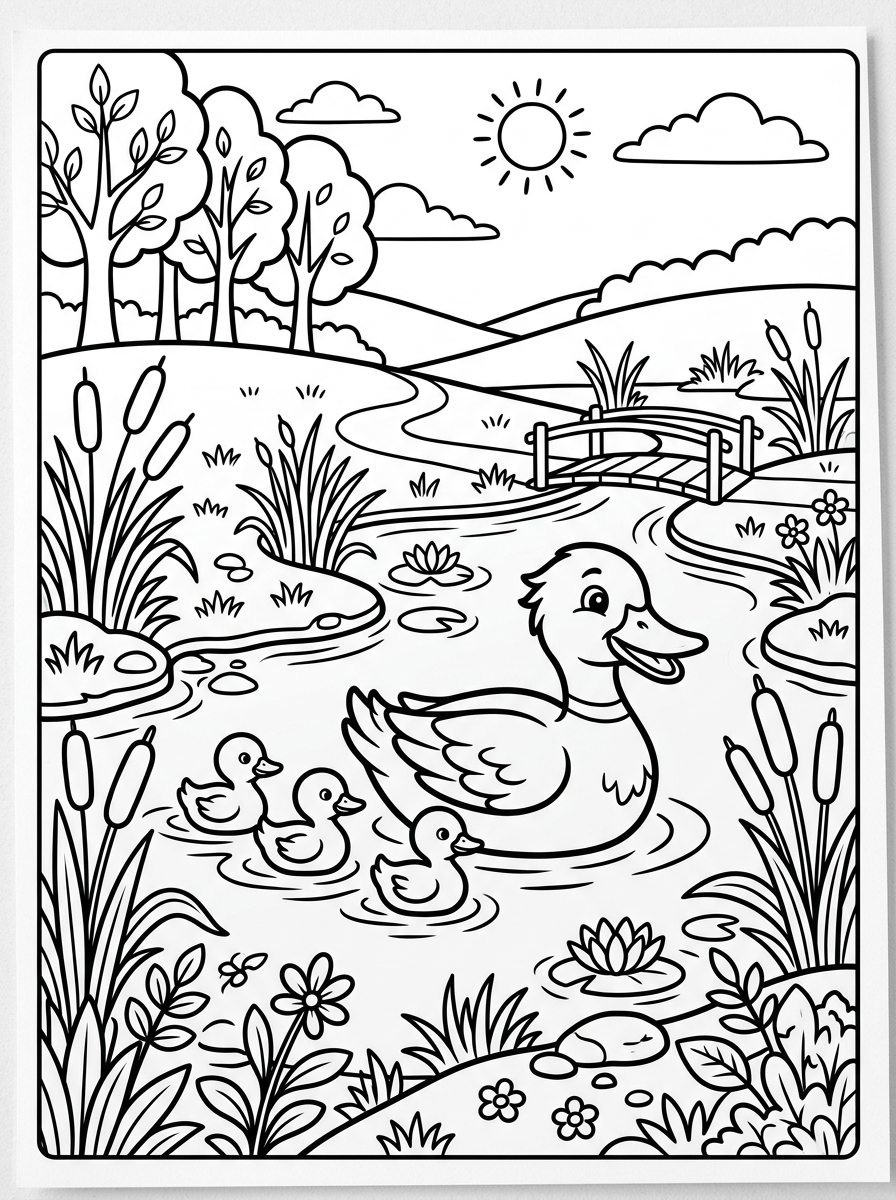
Ducks are the chicken's quieter cousin in the coloring world — same accessible body shape, but with a flat beak and webbed feet that introduce two small new challenges. Add a pond and the page suddenly tells a whole story. The yellow rubber-duck version stays one of the most popular preschool pages, year after year.
- Habitat
- Ponds, lakes, rivers and farms worldwide.
- Diet
- Omnivore — water plants, insects, fish, seeds and grains.
- Size
- Small — most species are 12 to 26 inches long.
- Best for
- All ages


About this animal
Meet the duck
Ducks are the chicken's quieter cousin in the coloring world — same accessible body shape, but with a flat beak and webbed feet that introduce two small new challenges. Add a pond and the page suddenly tells a whole story. The yellow rubber-duck version stays one of the most popular preschool pages, year after year.
- Habitat
- Ponds, lakes, rivers and farms worldwide.
- Diet
- Omnivore — water plants, insects, fish, seeds and grains.
- Size
- Small — most species are 12 to 26 inches long.
Coloring tips
How to color a duck
Mallards (the most-drawn species) have a bottle-green head, white neck ring, brown chest and gray-brown body. Female ducks and ducklings are all soft brown or yellow. The beak should be orange or yellow, and the webbed feet match the beak. Soft blue ripples under the body sell the water without crowding the duck.
Looking for more variety in the same style? Browse the other farm animals or head back to the full animal hub.
Step-by-step
How to color this duck
Five short steps that work for any age. Crayons, colored pencils and markers all work — pick whichever your child reaches for first.
Print the page
Save the duck coloring page to your device, then print it on standard letter or A4 paper. Thicker paper (around 90 gsm or 60 lb) handles markers without bleed-through; regular printer paper is fine for crayons and colored pencils.
Pick a barnyard color
Match a real farm animal: brown-and-white for cows, pink for pigs, soft tan for sheep, deep brown for horses. Fill the body with smooth strokes, leaving the face and lower legs for later detail.
Add patches and markings
Farm animals often have signature patches — Holstein cows have black blots, pigs have rosy splotches, dappled horses have soft circles. Add 3-4 irregular patches with a darker color or pure black.
Build a simple barnyard scene
A red barn in the distance, a yellow sun, and a strip of green grass under the feet turn a single animal into a full farm story. Keep the background colors light so the animal stays the star.
Finishing touches
When the colors are where you want them, trace the main outlines with a thin black pen to make the duck pop off the page. Date the back, snap a photo for the family album, then stick the finished page on the fridge.
What you'll need
A quick supplies checklist
Don't have everything? A printer, a piece of paper and a single crayon is enough to get started. The rest is optional.
Printer
Color or black-and-white both work. Set the print size to 'fit to page' and use letter or A4 paper.
Paper
Standard 20 lb (75 gsm) printer paper for crayons; 60+ lb (90+ gsm) for markers so the ink doesn't bleed.
Crayons
Best for ages 3-5 — forgiving on small hands, no smearing, and bright enough to feel finished in minutes.
Colored pencils
Best for ages 6+ and adults — perfect for shading, blending and the detailed pattern variants.
Markers
Bold, fast results. Pair with heavier paper so the ink stays on the page and doesn't soak through.
Did you know?
Fun facts to share while you color
Read these out loud — they turn a 20-minute coloring session into a quick science lesson.
A duck's quack doesn't echo, and scientists still aren't fully sure why.
Ducks have waterproof feathers thanks to oil from a gland near the tail.
They sleep with one eye open, with half the brain alert at a time.
A baby duck (duckling) can swim within hours of hatching.
You might also like
Kids who color ducks also like
Chicken coloring pages
Chickens are the social hub of any barnyard scene. The body shape is easy (round, with a small head and triangle beak), but the comb, wattle and tail feathers give kids real estate to play with color. Chicks add a built-in 'baby animal' page that almost every preschool catalog needs.
Owl coloring pages
Owls are the bird group's secret weapon. The body is short and round, the head is huge, and the face is a near-perfect circle — three properties that make the page extremely forgiving for younger kids. Older kids and adults can lean into the feather detail, which is some of the richest in the catalog.
Penguin coloring pages
Penguins are the easiest 'detailed' animal in the catalog. The classic tuxedo coloring — black back, white belly, yellow accents — is so well-established that kids can finish a recognizable page with just three crayons. Add a chick or an iceberg and you've got an instant winter scene.
Flamingo coloring pages
Flamingos are the easiest page to make beautiful. The classic S-curve neck, single bent leg and that one unforgettable shade of pink combine into a silhouette that feels finished after only a few minutes of coloring. They also pair naturally with palm trees, sunsets and other coloring-page favorites.
Turtle coloring pages
Turtles bridge the ocean and the land. The shell is the page's main feature — a built-in mandala of plates and patterns that asks kids to slow down and color section by section. The rest of the body (four flippers or four legs, plus the head) is small and quick, which keeps the page balanced.
Cow coloring pages
A cow is the first 'big' animal a lot of children color. The body is essentially one large rounded shape, the patches give kids a built-in pattern to follow, and the udder, tail and horns are all small enough to skip if the child gets bored. It's the rare page that works equally well for a 3-year-old and an 8-year-old.
Farm animals
More farm animals coloring pages
Farm animals are a classroom staple from preschool onward. Kids learn the sounds, the babies (calf, piglet, foal) and the food each animal gives us — all from coloring a single themed set. Bold outlines and simple silhouettes make these pages a safe choice for very young children.
FAQ
Duck coloring pages — FAQ
- Are these duck coloring pages free to print?
- Yes — every duck coloring page on this site is free to download, print and color for personal, classroom and library use. No watermark, no signup.
- What age are duck coloring pages best for?
- All ages. The yellow rubber-duck version stays one of the most popular preschool pages, year after year.
- What colors should I use for a duck?
- Mallards (the most-drawn species) have a bottle-green head, white neck ring, brown chest and gray-brown body. Female ducks and ducklings are all soft brown or yellow. The beak should be orange or yellow, and the webbed feet match the beak. Soft blue ripples under the body sell the water without crowding the duck.
- What do ducks eat and where do they live?
- Omnivore — water plants, insects, fish, seeds and grains. Ponds, lakes, rivers and farms worldwide.
- What other animals are similar to a duck?
- Try our chicken, owl, penguin coloring pages — kids who finish a duck page usually enjoy those next.
Looking for something else?
Browse all 41 animals in the catalog — pets, farm, safari, forest, birds, ocean and insects.
All animal coloring pages